

Toronto is a city where many famous people were born, writes toronto1.one. Each of them has contributed to developing a certain field of human life in the later years.
It is worth noting that science is one of the fields in which many Torontonians have always been involved. This is a bit of a paradox. But if you delve into the history of a particular field of science, you will find many names that belong to the natives of this wonderful Canadian city.
This is probably due to the high quality of education in Toronto and the active participation of local authorities in the development and improvement of science.
Isaac David Abella is one of the most famous scientists from Toronto. He went down in Canadian scientific history as a talented physicist and university professor. His research interests included laser physics, quantum optics and spectroscopy.
The beginning of the journey
Isaac Abella was born on June 20, 1934, in Toronto. He received his Bachelor of Arts degree in 1957 after graduating from the University of Toronto. In 1959, Isaac received his master’s degree. In 1963, he received his Ph.D. in Physics.
It is important that he received his third degree not in his hometown, but in New York. There, his teacher was Charles Townes, who involved the promising scientist in various studies of laser development.
What’s interesting is that Isaac’s thesis is considered to be almost the first work in the field of two-photon absorption.
Famous work
His work on laser-coherent transients brought Isaac great fame in the scientific world. The scientist used a photon echo to study metastable excited states in mixtures of helium, neon and argon.
The creation of such states is facilitated by weakly ionized RF plasma. With the help of lasers and nitrogen pumping, it is possible to create coherent superposition states.
Important researches
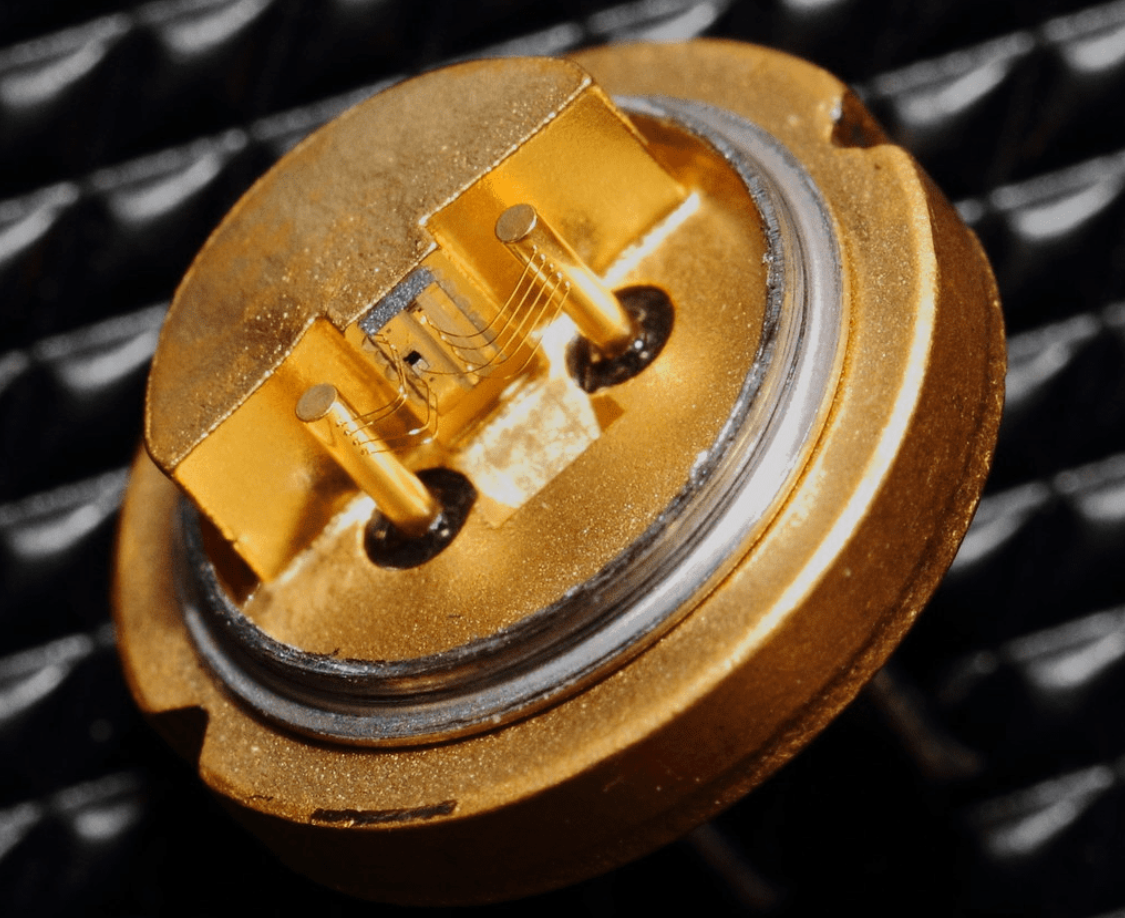
In addition, his work in the field of spectroscopy of rare earth laser materials brought him no less fame.
The scientist studied YLF and YAG crystals. He alloyed them with erbium, thulium and holmium. The study was conducted using selective laser excitation.
These materials are amenable to efficient optical pumping using arrays of laser diodes. It is important, however, that the laser excitation is applied to the dye.
Research interests
He was also interested in the process by which energy is transferred – from Er to Tm and Ho, where energy radiation is concentrated at room temperature and in liquid nitrogen.
This process is a radiation-free, almost resonant transfer of energy between nodes. It is directly related to the relative concentrations of rare earth ions.
It is fair to note that the experimental interests of the scientist also included the process of measuring the decay rate, excited state absorption, and branching coefficient. Naturally, Isaac was interested in detailed theories of all these processes. This can be seen in his scientific papers.
About his personal life
Isaac Abella’s path ended on October 23, 2016. Moreover, he died in America. His wife was also involved in the intellectual field but was a Professor of Art. The couple had two children, a daughter, Sarah, and a son, Benjamin.