

Mary Elliott is an integral part of Canadian science as a phytopathologist and mycologist, writes toronto1.one. For twenty-eight years, she worked in the Canadian Ministry of Agriculture and Agri-Food.
Mary gained the most popularity from her work, where she highlighted the taxonomy and physiology of Sclerotiniaceae. She was also an excellent specialist in identifying fungi. Furthermore, she headed the Canadian Botanical Association.
Education
Mary was born in Toronto. But when she reached school age, her family moved closer to Ottawa. There, the future scientist attended school, and later became a student at Queen’s University. In 1949, she graduated from this institution with a bachelor’s degree.
Career Start
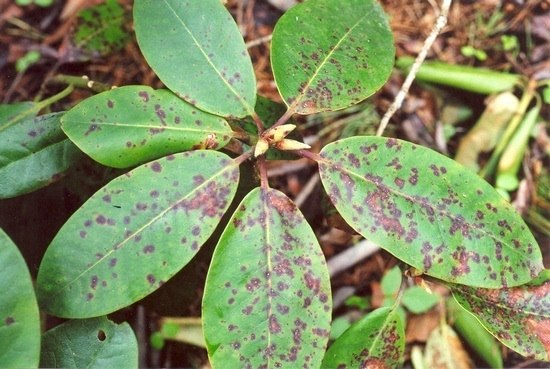
While still a student, she began working at the Central Experimental Farm in Ottawa. There, she was an employee in the Botany and Plant Pathology Division, where she researched seed-borne plant diseases.
This work was very serious and responsible. Because after the war, quality seed was in great deficit.
Around this time, she completed courses in areas such as mycology and microbiology. This was necessary for her to improve the quality of her work.
Research
Mary’s work in the aforementioned division lasted for ten years, and only after that did she move to the Mycology Division.
Then she was able to expand her research and became interested in cereal diseases. Thus, the young scientist began gaining experience in the taxonomy and biology of Sclerotineaceae.
Scientific Works
Her research on Sclerotineaceae also included her own taxonomic work, which complemented physiological and developmental work.
Around this time, Mary was able to publish articles in which she described new species of Stromatinia and Streptotinia.
In addition, these scientific papers detailed the sexual behaviour of other genera of Sclerotiniaceae.
Denial by Management
Interestingly, Elliott applied to management for a leave of absence. This was necessary for her to continue her studies in graduate school. However, this request was rejected by her superiors.
It is important to note that in 1958, she became a member of the Mycological Society of America. Later, she joined the Mycological Society of Japan and the Canadian Phytopathological Society.
Public Service
In addition to her scientific activities, Mary was involved in public service. This was mainly dedicated to identifying fungi intended for public consumption.
She was responsible for preparing toxicological information in case of mushroom poisonings. And, of course, she was responsible for identifying the species that caused the poisoning.
Development of the Herbarium
1975 was marked by her appointment as curator of the National Mycological Herbarium. There, she focused on development aimed at ensuring that mycological information provided maximum benefit to the staff mycologists and visiting scientists studying taxonomy, morphology, life history, distribution, and substrate or host ranges.
A New Rise
1972 marked a new turn in her career. She became the secretary of the Canadian Botanical Association. In 1974, she moved to the position of vice-president of this Association. And in 1975, Mary became the president of the organization. However, unfortunately, she did not manage to accomplish everything she had planned in this role, as, by an irony of fate, her earthly journey ended at the same time.
Photo: akspic, orchidea-shop