

During the COVID-19 pandemic, when many public facilities ceased operations, libraries across Canada intensified their efforts to serve communities. The Toronto Public Library (TPL), in particular, became a vital resource, offering online access to virtual books, stories, and other diverse materials. Moreover, it expanded its role in community support by partnering with local food banks to deliver meals and enabling curbside book pickups across the city. As of 2024, the Toronto Public Library system, with its 100 branches and nearly one million cardholders, is one of the busiest urban library systems in the world. Read more on toronto1.one.
The Foundation of the Toronto Public Library
In 1884, Toronto lacked any designated building for its public library. Two years later, provincial legislation allowed municipalities to levy taxes to fund free public libraries. Despite this development, the Toronto Public Library initially operated out of rented rooms, as it lacked a dedicated space conducive to readers’ needs. The first facility opened in the former Mechanics’ Institute building downtown and later expanded to serve communities such as Parkdale, Islington, and Highland Creek.
It wasn’t until 1903 that a grant from the Carnegie Foundation enabled the construction of a central library and three branches. The foundation, led by industrialist Andrew Carnegie, financed the building of over 2,500 libraries worldwide, including 125 in Canada (111 of which were in Ontario and 10 in Toronto). To receive a grant, communities had to meet three conditions: provide land, cover operational costs post-construction, and offer free public services.
The Uniqueness of Carnegie Libraries
Carnegie libraries were not only functionally significant but also shared a distinctive aesthetic. The Corinthian capitals of Toronto’s former central library reflected the neoclassical architecture popular for public buildings at the turn of the 20th century. This style, rooted in Ancient Greece and Rome and revived during the 18th-century Renaissance, spread across North America as architects trained at Paris’ École des Beaux-Arts.
The central library in Toronto was designed by Wickson & Gregg and A.H. Chapman, Associated Architects. Chapman drew inspiration from other Carnegie libraries in Ontario, incorporating neoclassical symmetry and order into the design. The building’s hierarchy of spaces was reflected in its size and ornamentation. The reading room, the most important area, featured two-story windows for natural light and an elaborate ceiling, fostering an atmosphere of wonder and imagination. Unlike later libraries, Carnegie buildings focused on reading rather than browsing, as books were only accessible through librarians. It wasn’t until 1930 that renovations allowed readers to browse the shelves directly.
Branch Libraries and Their Architectural Style
The Yorkville Branch, Toronto Public Library’s oldest remaining building, is another example of a Carnegie-funded library. Designed by Robert McCallum and opened in 1907, it represents the classic Carnegie library with its robust symmetry and simple columns. The light-filled reading rooms and communal spaces became hallmarks of these libraries. While the Yorkville Branch is smaller than the central library, it is more representative of Carnegie-funded projects across Canada.
The final Carnegie library in Toronto was constructed in 1916. By this time, the city had begun funding its own buildings, leading to the Bloor/Gladstone Branch opening in 1913. Over the following decades, the library system expanded, especially during the post-war boom. By the 1950s, TPL served not just Toronto but the rapidly growing metropolitan area.
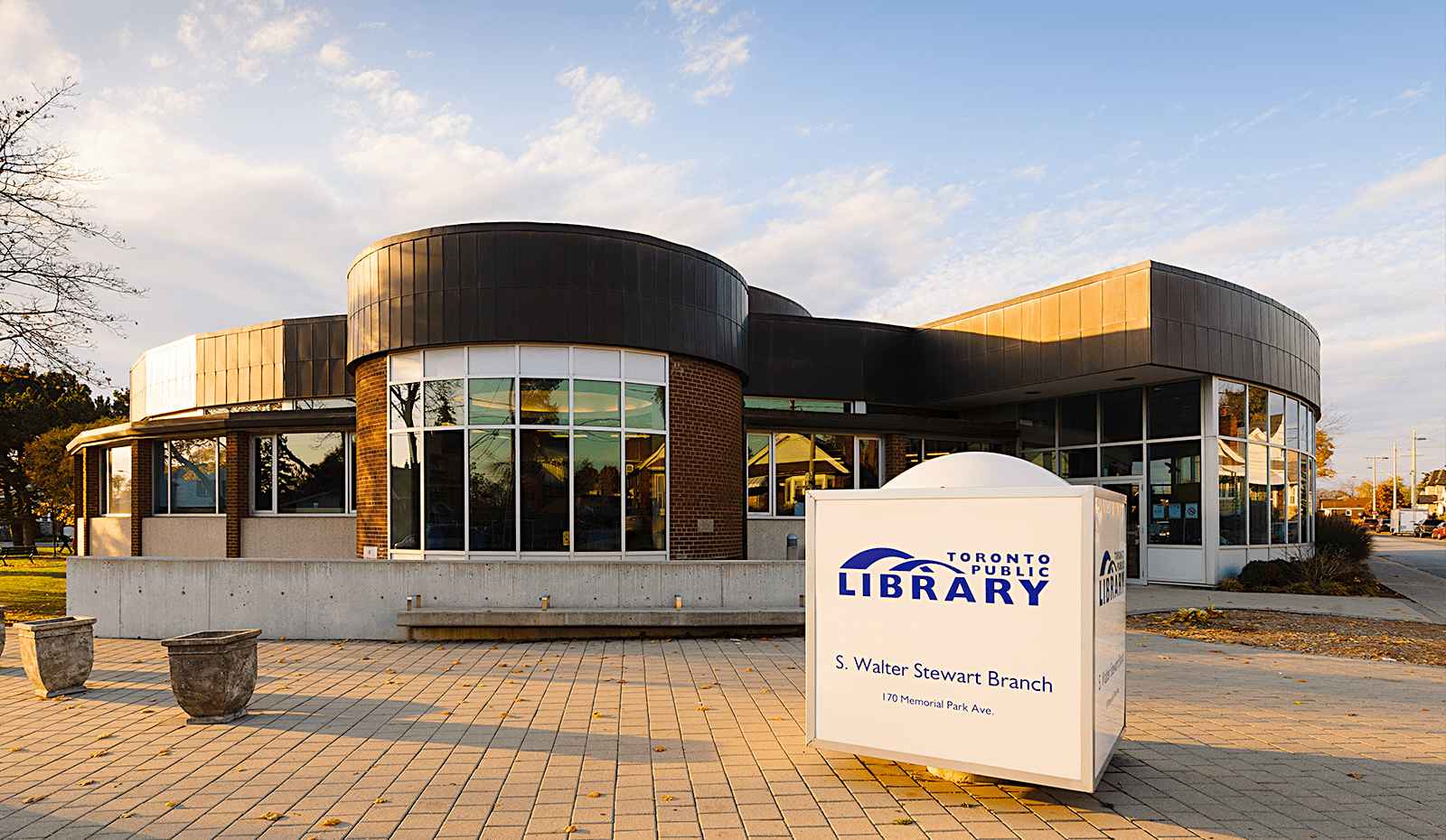
In 1966, one Carnegie library was demolished to make way for a centennial library, while brutalist libraries built in suburbs like Etobicoke and North York during the 1960s and 1970s were later renovated to soften their stark concrete aesthetics. After this period of rapid expansion and stylistic evolution, the Reference Library set the tone for a new generation of libraries.
The Reference Library: A New Era
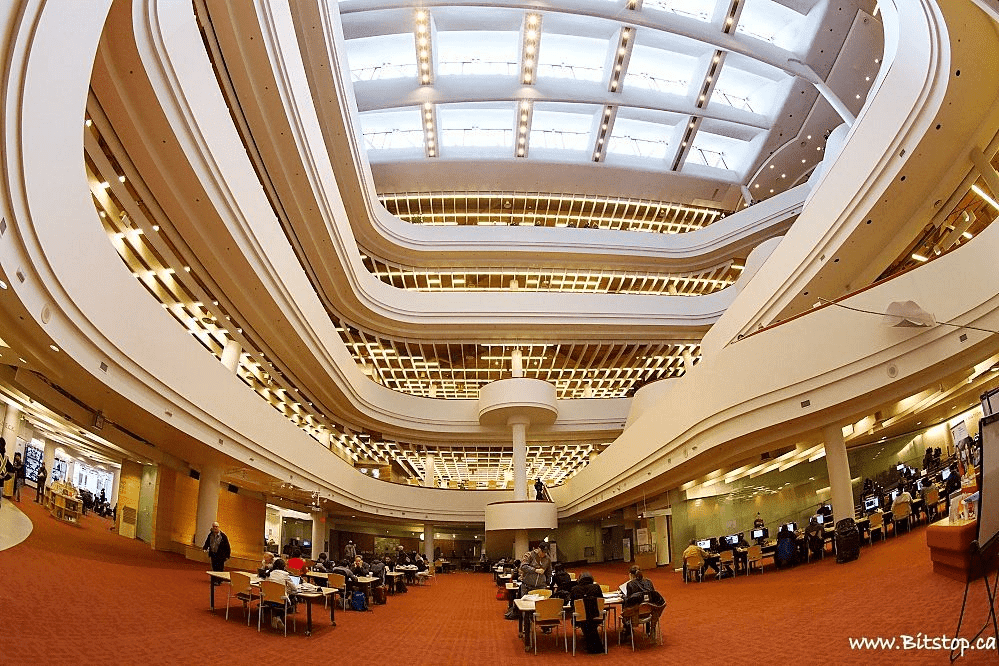
Built in 1977 to accommodate the city’s growing needs, the Toronto Reference Library replaced the 1909 central library, which could no longer expand. Designed by Raymond Moriyama Architects, the original plans envisioned a glass cube reflecting the streetscape during the day and showcasing multi-level book stacks around a five-story atrium at night. However, in deference to Toronto’s brick-built heritage, the architects instead clad the library in red brick, integrating it with its Victorian surroundings.
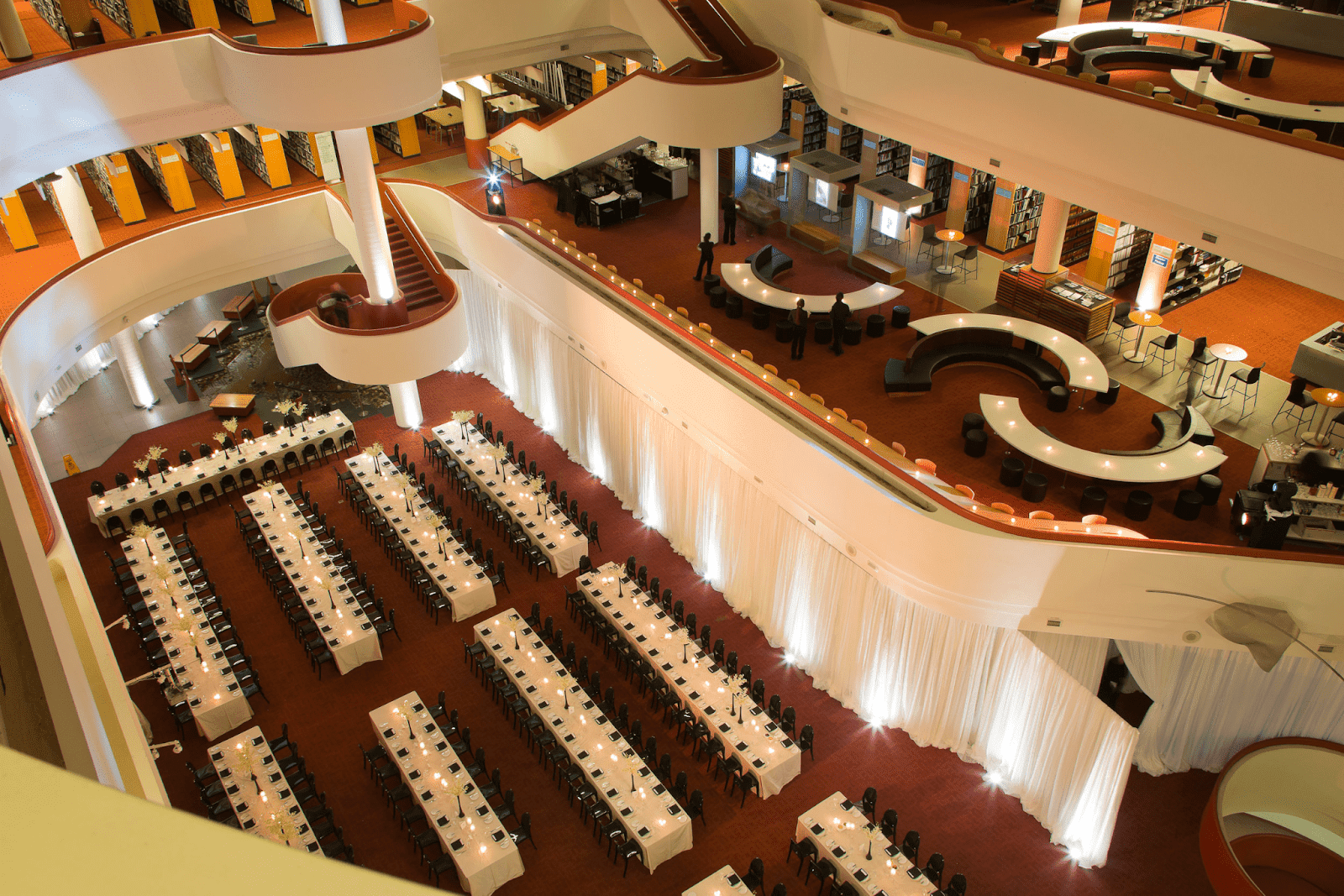
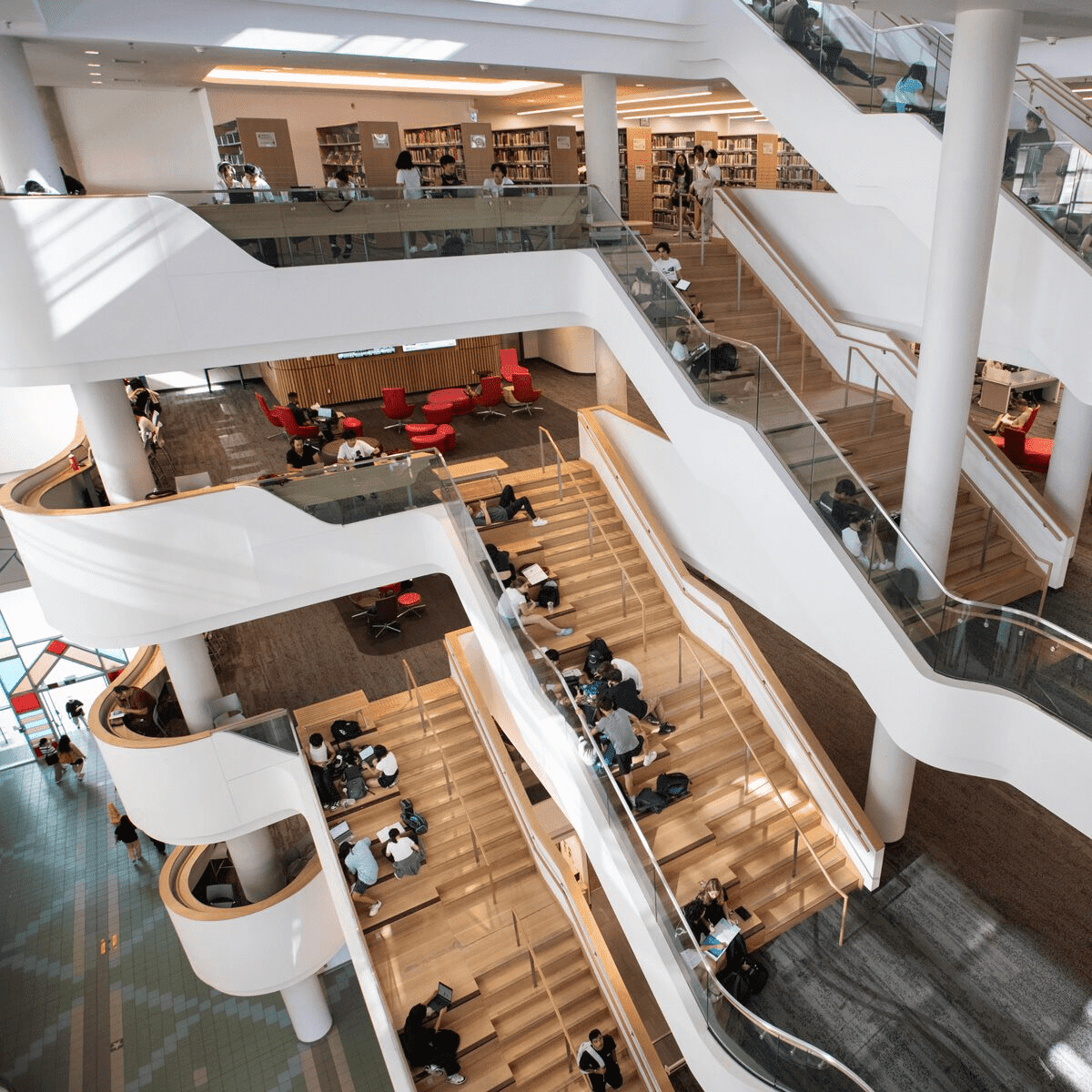
Despite these compromises, the Reference Library has continually adapted to modern demands. A significant renovation in the early 2000s highlighted its role as a community hub in the digital age. The update introduced computer labs, collaborative workspaces, 3D printing facilities, and other tools to support creativity and innovation. A new glass foyer around the main entrance revived elements of the glass cube concept, while street-level cafes and a gift shop strengthened ties between the library and its urban environment.
Today, as education and cultural experiences increasingly shift online, libraries like the Toronto Public Library lead the way in building inclusive digital infrastructure. From hosting technology labs to offering spaces for innovation, TPL ensures that it remains a vibrant resource for learning and collaboration in a rapidly changing world.
Sources: