

In the 19th century, Toronto became an independent city with its political system and educational structure. It was during this time that Indigenous Canadians and immigrants began attending schools. Initially, there were only a few institutions, but a system of public and private schools soon emerged. Discover how secondary education developed in Toronto over several decades at toronto1.one.
Opening the First School in Toronto
The history of secondary education in Toronto began in 1807, driven by politicians and community leaders. The initial step toward organized schooling was enrolling children to learn humanities and sciences. At that time, only five students participated.
The city lacked dedicated school buildings, and early classes were held in the home of George Okill Stuart, rector of St. James Church. As enrollment grew, the need for more space became apparent. In 1812, politician John Strachan raised funds to construct Toronto’s first secondary school. The two-story building, with multiple classrooms, opened in 1816 and was later officially named the Toronto Grammar School. This institution, still operational today, is the city’s oldest and most prestigious school.
Preparing Teachers for Education
With the establishment of Toronto’s first school, demand for secondary education grew rapidly, creating the need for professionally trained teachers. To address this, Upper Canada’s government opened a teacher training school in Toronto in 1847.
Located at Church and Gould Streets in downtown Toronto, the facility could accommodate 200 trainee teachers and 600 students. This institution became an educational hub and a cornerstone of Toronto’s developing education system. Teachers gained knowledge and practical experience by working with children in special training classes, typically comprising 30 to 40 students.
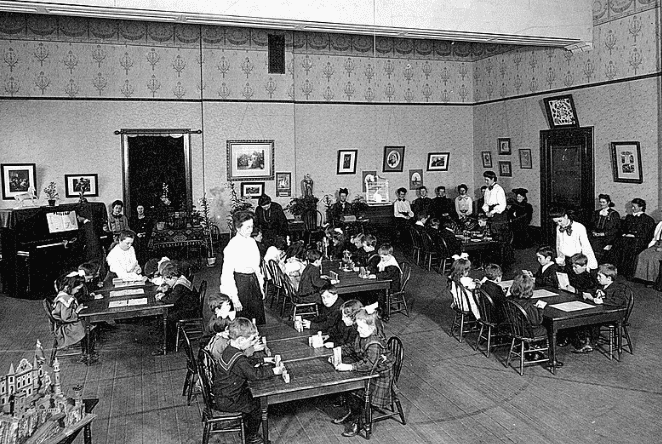
Daily classes ran for several hours in large groups, with children using textbooks, notebooks, and educational materials to enhance their learning.
Under the leadership of the teacher training school, additional institutions were established in Toronto, including the Natural History and Fine Arts Museum, the Artists’ Society, and the Ontario College. This marked a new chapter in the city’s secondary education system.
Establishing the Public School System
In 1841, educational legislation was passed thanks to effective collaboration between representatives from Eastern and Western Canada. Canadian educator, politician, and lawyer Egerton Ryerson played a significant role in shaping Toronto’s education system.
In 1850, Ryerson introduced legislation creating municipal school boards to oversee the quality of education and secure funding. At the time, Toronto lacked dedicated school buildings for its thousands of students. Classes were held in rented spaces, including small halls and houses, identified by street names and numbers.
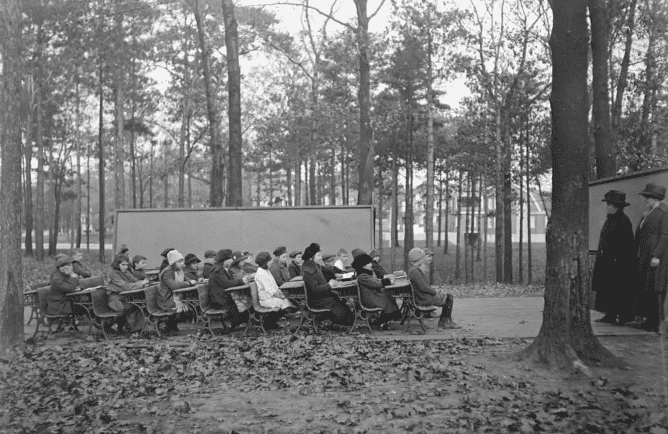
To provide better conditions for students and teachers, numerous schools were built in Toronto by the late 19th century, including Weston (1857), Harbord (1892), and Humberside (1892). Many were constructed in the Gothic architectural style. Additionally, open-air schools like the High Park Forest School were established. Designed for children suffering from tuberculosis or malnutrition, the school primarily served underprivileged students until 1963, when they transitioned to public and private schools.
Toronto continued to build new schools, particularly during the construction boom of the 1960s and 1970s, driven by population growth and increased immigration.
In 1998, the school boards of each district were consolidated into the Toronto District School Board. This central body implemented changes to curricula, school funding, extracurricular activities, and student support programs, shaping the modern education system.