

George Brown College is an educational institution that combines both theory and practical experience in its programs. The college emphasizes real-world and experiential learning, giving students opportunities to collaborate with professionals from various industries on applied research and field education projects. Let’s take a closer lo toronto1.one.
Who Was George Brown?
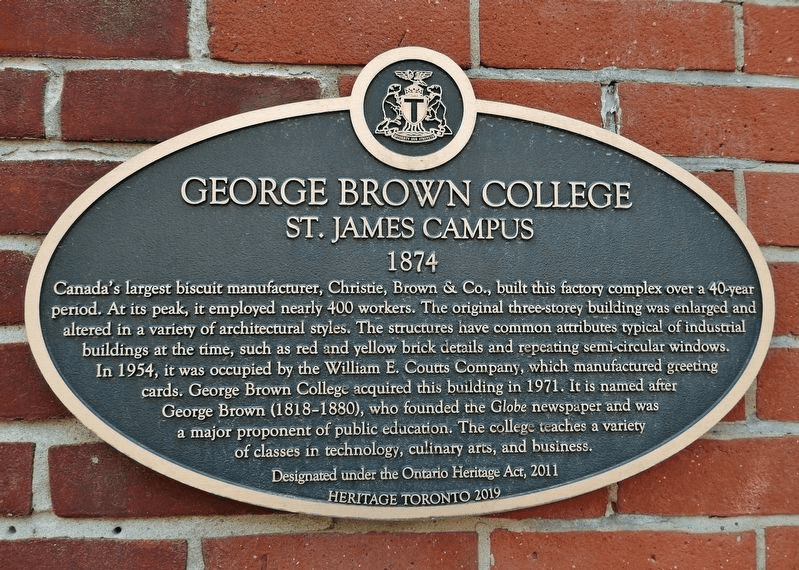
George Brown College is named after the late Canadian Liberal politician George Brown (1818–1880), a Scottish-born founding father of Canadian Confederation and the founder of The Globe, known today as The Globe and Mail. When the college of applied arts and technology was established in 1967, then Ontario Minister of Education Bill Davis proposed naming it after George Brown. Davis saw this as a fitting tribute to Brown’s contributions as a politician and journalist, particularly his advocacy for public education.
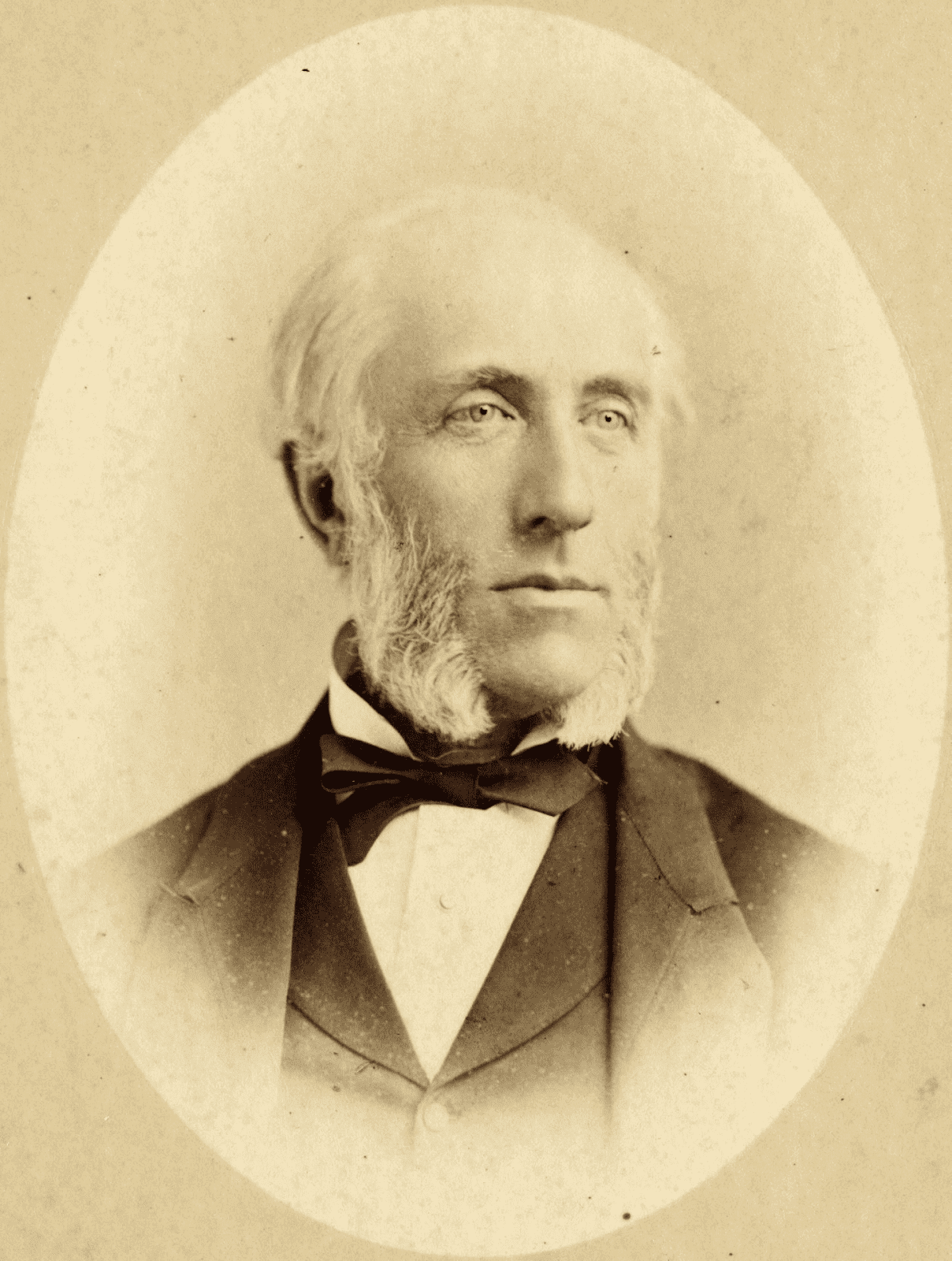
In 1851, George Brown was elected to the Legislative Assembly of Canada as a Reformer representing Kent County. Initially working alone, he opposed the Hincks-Morin administration and refused to align with the “Clear Grits.” However, his support for population representation and campaigns against French-Canadian and Roman Catholic dominance (as perceived) made him a prominent Reformer in Upper Canada.
When the Macdonald-Cartier government resigned in 1858, Brown briefly formed the Brown-Dorion administration. Later, he joined the Great Coalition in 1864 to establish Confederation. Brown played a key role at the Quebec Conference in October 1864, though he resigned from the government the following year due to personal and political differences, particularly with John A. Macdonald, with whom he had a long-standing rivalry.
Despite stepping away from Parliament, Brown remained an influential figure, considered the power behind Alexander Mackenzie’s administration (1873–1878). Known for his journalistic prowess, his leadership of The Globe was described as a reign of “literary terror,” yet he occasionally demonstrated statesmanlike vision.
In 1862, Brown married Anne Nelson, the daughter of a Scottish publisher, with whom he had five children. He passed away in Toronto on May 9, 1880, from a gunshot wound inflicted by a dismissed employee.
The College Opens Its Doors
George Brown College officially opened on March 1, 1968, with 2,009 students and 187 faculty members across five buildings on Nassau Street (Kensington Market and the Dartnell Campus near Casa Loma). The college initially offered programs such as early childhood education, dentistry, construction, culinary arts, scriptwriting, marine engineering, and watchmaking.
By 1969, the college expanded to 4,000 students, incorporating adult learning centers into its College Street Campus. This campus offered programs in ESL, commercial courses, and academic upgrades, along with specialized classes in retail, pattern-making, design, offset printing, and truck driving.
George Brown College Campuses
In 1973, the Dartnell Campus was renamed the Casa Loma Campus and moved to 160 Kendal Avenue. Initially, the campus focused on applied arts and technology programs such as computer systems, construction, jewelry-making, and even dance. Nursing programs from Toronto General Hospital, St. Michael’s Hospital, St. Joseph’s Hospital, Atkinson School of Nursing, and Nightingale School of Nursing were also transferred to George Brown College. As of 2024, Casa Loma Campus includes four buildings housing academic centers like the Centre for Construction and Engineering Technologies, the Centre for Preparatory and Liberal Studies, and the School of Arts, Design, and Information Technology.
In 1976, George Brown opened the St. James Campus at 200 King Street East, initially focusing on public service, job preparation, business, and programs for the deaf and deaf-blind. In 1987, the campus expanded to include the Centre for Hospitality and Culinary Arts, with a student-focused restaurant, The Chefs’ House, opening in 2008. Today, St. James Campus features seven buildings in downtown Toronto, offering programs in business, arts and design, community services, early childhood education, hospitality, and liberal studies.
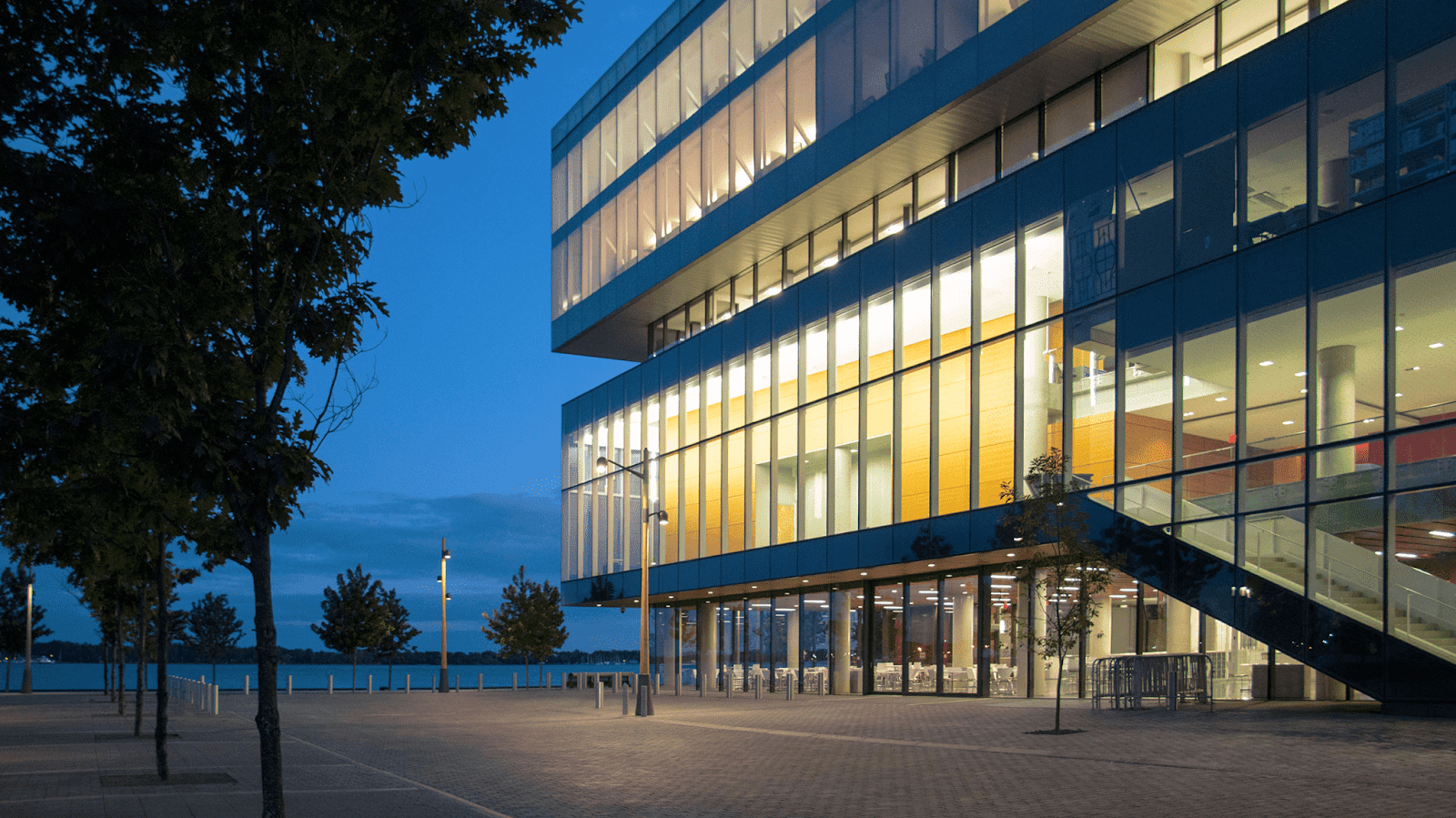
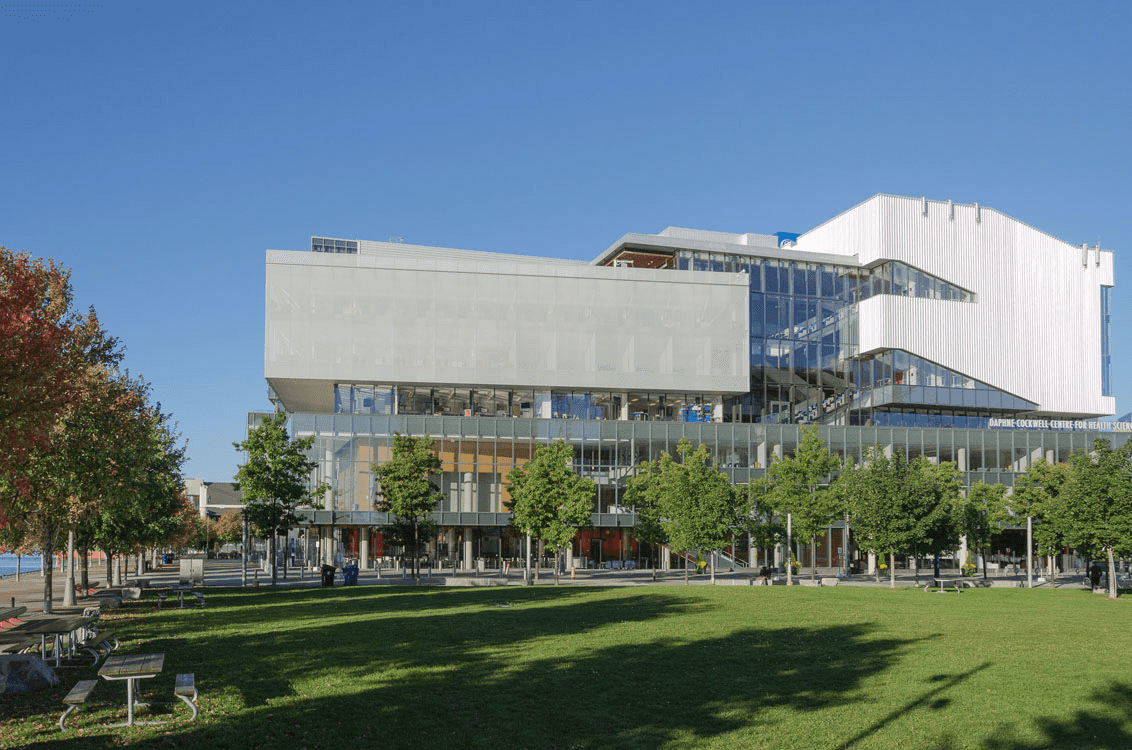
The Waterfront Campus, opened in 2012, houses the Daphne Cockwell Centre for Health Sciences at 51 Dockside Drive, offering programs in dental health, health management, and nursing. In 2019, the campus expanded to include the Daniels Waterfront School of Design.
George Brown College Today
George Brown College currently serves over 30,000 students and employs more than 5,300 staff. Since its inception, the college has graduated over 240,000 students. In the 2019–2020 academic year, George Brown offered 172 full-time programs, including:
- 44 programs in the Centre for Arts, Design, and Information Technology
- 26 programs in the Centre for Business
- 12 programs in the Centre for Community Services and Early Childhood
- 29 programs in the Centre for Construction and Engineering Technologies
- 25 programs in the Centre for Health Sciences
- 17 programs in the Centre for Hospitality and Culinary Arts
- 19 programs in the Centre for Preparatory and Liberal Studies
George Brown College continues to provide quality education and endless opportunities for students to enhance their skills. The college’s future promises exciting prospects, preparing students for both career advancement and life in the modern world.
Sources: