

For over two centuries, Toronto has had a formal school system. Its development began with the opening of Jarvis Collegiate Institute, the oldest school in the city and the first to receive public funding. Initially, it served only a few students, but within decades, this school became one of the most prestigious educational institutions in Canada. Who contributed to its growth? Where was the first school located? And which alumni brought fame to this great Canadian city? Read on at toronto1.one.
A Brief History of Toronto’s First Public School
The school now known as Jarvis Collegiate Institute was established on June 1, 1807, under the name Home District Grammar School of York. The first lessons were conducted in the home of George Okill Stuart, the rector of St. James’ Church in Toronto. Initially, the school enrolled only a handful of students due to the lack of classroom space, starting with just five pupils and later growing to over 20.
In 1812, John Strachan, a politician and public figure, took over as headmaster. Strachan, who became Toronto’s first Anglican bishop, is credited with initiating the city’s secondary education system. His first reform was fundraising for a two-story schoolhouse on a six-acre property. Completed in 1816, it became the new home for the school.
In 1825, the school was renamed the Royal Grammar School. Later, it adopted the title Toronto High School. In 1829, it absorbed the newly established Upper Canada College.
By the early 1860s, the school’s three classrooms could no longer accommodate its growing student population, which had reached about 150. To address this, a new building was constructed in 1864 on Dalhousie Street, near what is now Toronto Metropolitan University.
During this period, new schools and the Toronto Grammar School Society for Intellectual Development were established. The growing demand for secondary education spurred competition among them.
In 1871, to accommodate even more students, a new school building was erected at 361 Jarvis Street, south of College Street and across from the Allan Gardens conservatory. When it opened, the school was still known as Toronto High School. However, in 1873, it was renamed the Toronto Collegiate Institute. With the establishment of another college, Parkdale CI, in 1890, it was renamed Jarvis Street Collegiate Institute. This building underwent multiple expansions until the current school structure was built in 1924 at 495 Jarvis Street.
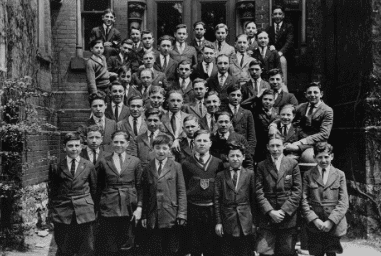
Principles of Education at Toronto’s Oldest School
Jarvis Collegiate Institute has been open to Toronto students for over 200 years. During this time, it has earned its place as one of the city’s most prestigious secondary schools. Education here is based on the following principles:
- Developing each student’s potential through the cultivation of knowledge and values.
- Mentorship and respect for every student, fostering academic, social, and leadership growth.
- Encouraging the development of leadership skills.
- Nurturing students’ creative talents and providing meaningful leisure activities, such as recreational events and field trips.
Notable Alumni of Jarvis Collegiate
After graduating from Toronto’s first school, many alumni went on to become successful, respected, and well-known figures. Over the 19th and 20th centuries, the school produced politicians, musicians, journalists, artists, and more.
One of the school’s proudest achievements is Hector Charlesworth, who served as editor and critic at the Toronto Mail and Empire from 1904 to 1910. He later chaired the Canadian Radio Broadcasting Commission from 1932 to 1936.
Another notable figure is Allan Lawrence. In 1958, Lawrence won an election and became a Canadian politician, serving as a Member of Parliament and a federal minister.
Among the school’s prominent alumni is Bert Wemp, a journalist and mayor of Toronto. Wemp led the city from 1930, introducing numerous reforms aimed at urban development.
The school also boasts many graduates with exceptional creative talents. Ernest MacMillan, a musician, composer, and conductor, made significant contributions to Toronto’s music industry. From the 1920s to the 1950s, he founded the Conservatory Choir, composed the Music for Youth series, and conducted numerous symphony orchestras in Toronto.
Jarvis Collegiate Institute remains a cornerstone of education in Toronto, offering quality schooling and shaping future generations. We hope this article provided valuable insights into the history and development of this iconic institution.
Sources: