

Michael James Alec Snow was a celebrated Canadian artist, filmmaker, and musician. Renowned as one of Canada’s most significant visual artists and avant-garde filmmakers, Snow’s work redefined the relationships between different media, acts of perception, and the complex interplay of sound, language, and meaning. A Companion of the Order of Canada and a Knight of the French Order of Arts and Letters, Snow was also the first recipient of the Governor General’s Award in Visual and Media Arts. Among his numerous accolades were the Molson Prize, a Guggenheim Fellowship, and the Gershon Iskowitz Prize. More details on toronto1.one.
Education, Early Exhibitions, and Meeting His Wife
From 1948 to 1952, Snow studied at the Ontario College of Art under filmmaker John Martin, who encouraged him to submit his abstract painting, Polyphony, to the Ontario Society of Artists’ annual exhibition. The piece was accepted, leading to Snow’s first public art exhibition.
After graduating, Snow worked in advertising, painted, and performed jazz music. In 1955, George Dunning, the animator who directed The Beatles’ Yellow Submarine, noticed Snow’s drawings at a small exhibition and offered him a position at Dunning Graphic Films. While working there until the company’s closure in 1956, Snow created his first independent film, the short animated A to Z (1956). Around this time, Snow met his first wife, artist Joyce Wieland.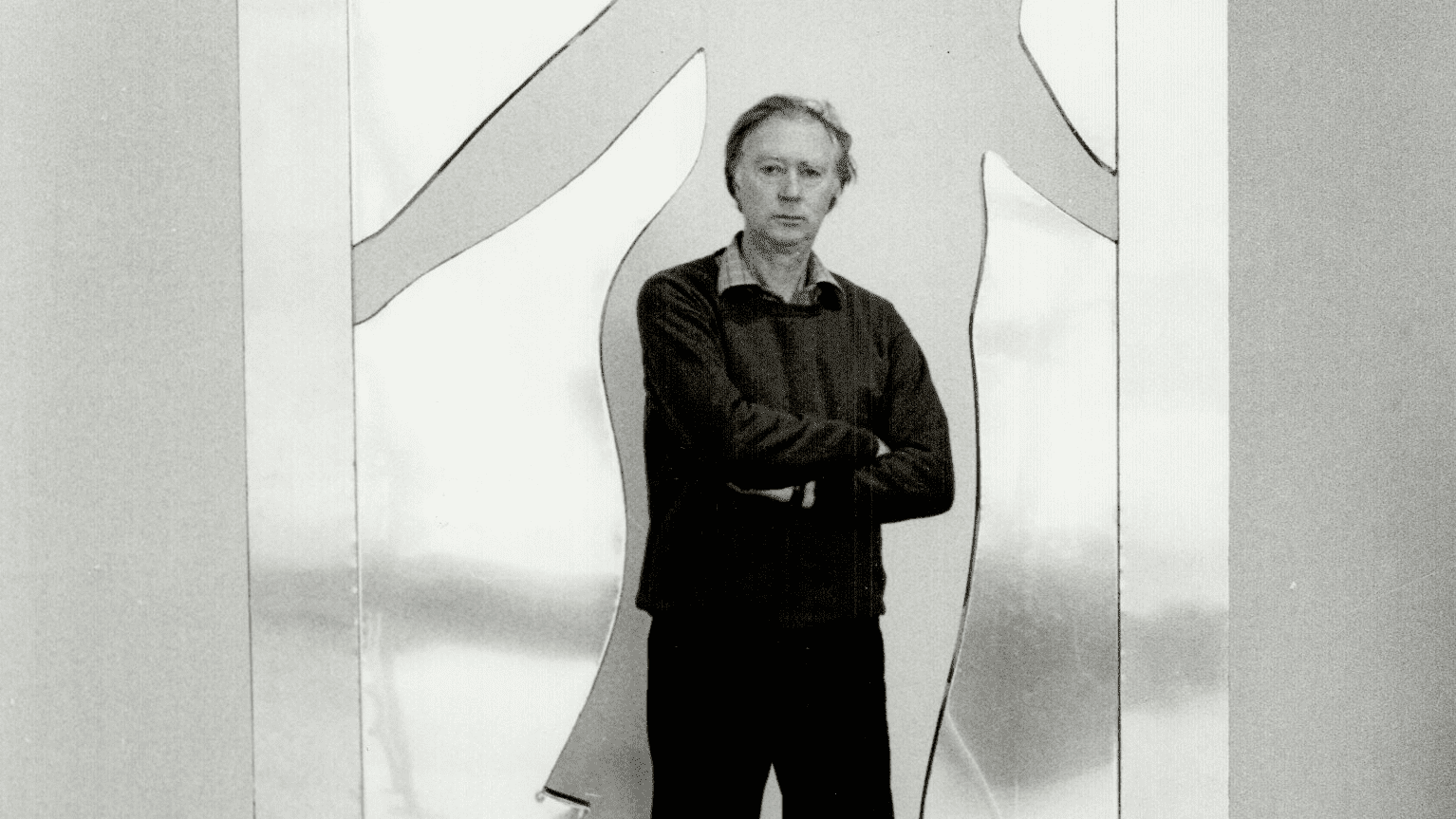
In 1956, Snow held a solo exhibition at Avrom Isaacs’ Greenwich Gallery in Toronto.
The Walking Woman Motif and Cinematic Art
Between 1961 and 1967, Snow’s works across various media centered around the silhouette of a walking woman. Whether in painting, drawing, or sculpture, the iconic figure featured exaggerated feminine curves, arms swinging forward, and a distinctly dynamic posture. The culmination of this series, titled Walking Woman Works, was an 11-piece sculpture for the Ontario Pavilion at Expo 67.
From the mid-1960s onward, cinema became a key medium for Snow. His first major film, New York Eye and Ear Control (1964), integrated the Walking Woman figure and added an original free-jazz soundtrack by Albert Ayler. The film juxtaposed real people with monochrome sculptures, ending with provocative imagery of interracial intimacy.
Snow’s most famous work, Wavelength (1967), solidified his reputation as an avant-garde filmmaker. This 45-minute zoom across a SoHo loft features a shifting sine wave sound and unexpected visual incidents, such as color flickers and abstract interruptions. The film won the Grand Prize at the Knokke Experimental Film Festival.
In La région centrale (1971), Snow used robotic camera movements to capture remote landscapes in Northern Quebec. The three-hour film eschews human perspectives, showcasing surreal images of tundra, cliffs, and mountain vistas.
Post-1970 Films and Exhibitions
After returning to Canada in the early 1970s, Snow’s films became less formal and more whimsical compared to Wavelength or La région centrale.
In Rameau’s Nephew (1974), a four-and-a-half-hour film, Snow began with sounds of crunching snow on a bright red background, transitioning to scenes of reversed dialogue. His 2002 digital work, Corpus Callosum, explored the brain’s manipulation of imagery, continuing Snow’s interest in the nature of perception.
Snow represented Canada at the Venice Biennale in 1970 and held a retrospective at the Art Gallery of Ontario that same year. Comprehensive surveys of his work were presented in Lucerne, Bonn, and Munich in 1978. That year, Snow created the Flight Stop installation for Toronto’s Eaton Centre, featuring suspended geese sculptures. For Expo 86 in Vancouver, he produced The Spectral Image, a major holography installation.
In 1989, Snow completed Audience, a gold-painted sculpture for SkyDome (now Rogers Centre) in Toronto. A 1994 retrospective at Toronto’s Power Plant gallery featured his experimental projects. Following his Gershon Iskowitz Prize in 2011, Snow’s work was celebrated in the AGO’s exhibition Objects of Vision.
Jazz and Solo Concerts
Though primarily associated with visual arts, Snow was an accomplished musician. Inspired by Chicago’s boogie-woogie pianist Jimmy Yancey in the late 1940s, Snow played piano in Toronto jazz groups while studying at the Ontario College of Art. He later picked up the trumpet in the 1950s.
Snow became immersed in free jazz, performing with the Artists’ Jazz Band and Toronto New Music Ensemble. As a founder of CCMC, Snow also gave solo piano performances in Toronto, Quebec, and New York.
His solo albums mirrored his approach to visual art, offering expansive manipulation of themes and techniques across auditory mediums.
Accolades and Honours
Snow’s dedication to redefining media and perception earned him widespread recognition in North America and Europe as an experimental filmmaker. In 2000, he received the Governor General’s Award in Visual and Media Arts. A member of the Royal Canadian Academy of Arts, Snow won the Guggenheim Fellowship in 1972, the Molson Prize in 1979, and was named an Officer of the Order of Canada in 1981. He was also appointed a Knight of the Order of Arts and Letters in France.

Snow earned honorary degrees from Brock University (1975), NSCAD University (1990), University of Victoria (1997), University of Toronto (1999), and Emily Carr University of Art and Design (2004).
Sources: