

Harold Town was a Canadian artist celebrated for his work across various genres, particularly his unique abstract paintings. As a member of Toronto’s Painters Eleven, he played a pivotal role in advancing Canadian art. Read more about his life and artistic journey below on toronto1.one.
A Passion for Drawing
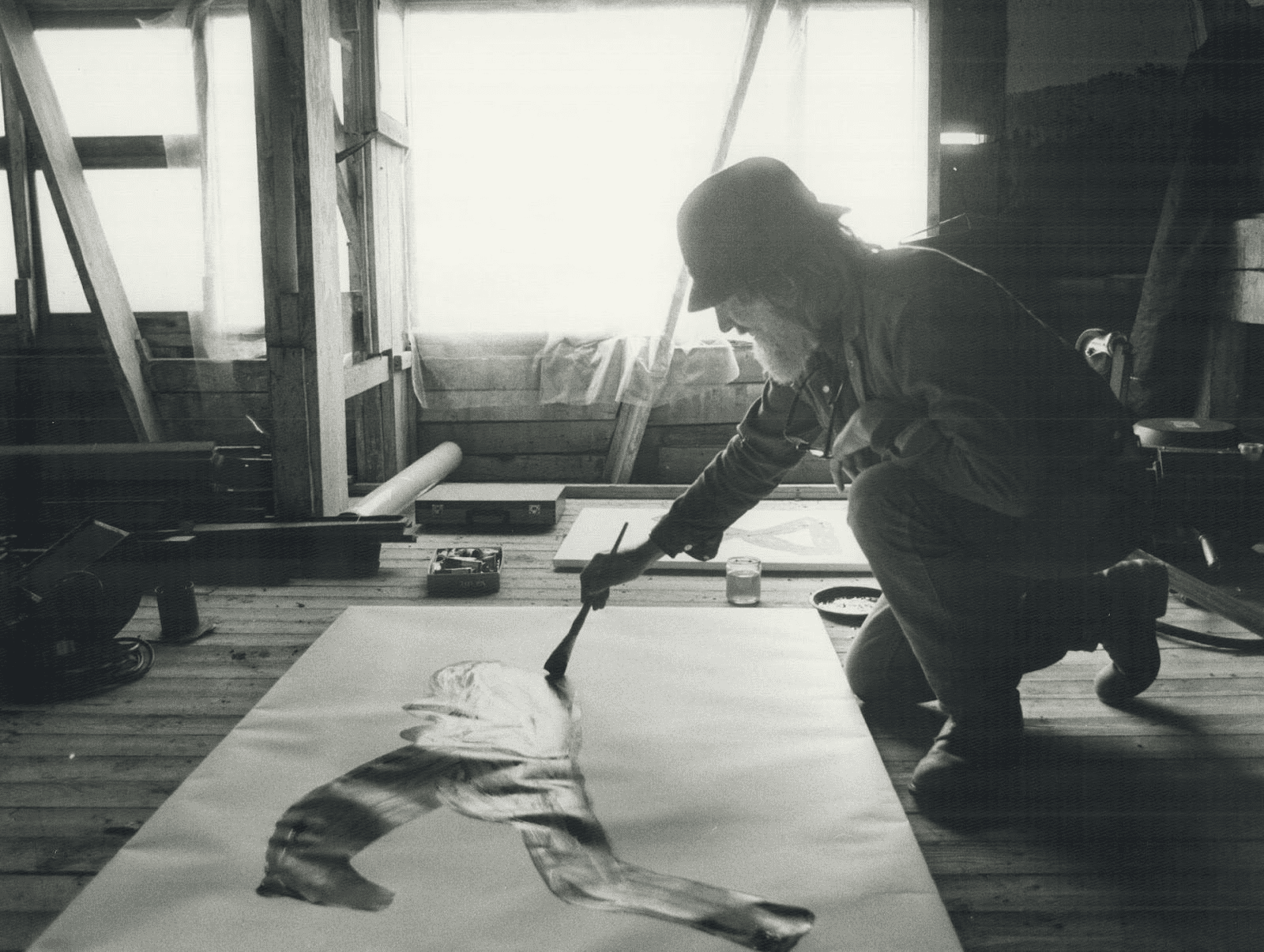
Born in Toronto in 1924, Harold Town displayed a passion for drawing from a young age. His mother encouraged his early artistic endeavors by allowing him to sketch on the kitchen table. During his teenage years, he developed an interest in history and literature.
At Western Technical-Commercial School, Town specialized in art, drawing inspiration from Renaissance masters. From 1942 to 1944, he studied at the Ontario College of Art, where he was mentored by director John Martin. During this time, Town frequently visited the Art Gallery of Toronto to study the works of historical artists, often seeing them as challenges to surpass. By the age of 20, he had already mastered techniques akin to Edgar Degas.
The Beginnings of His Artistic Career
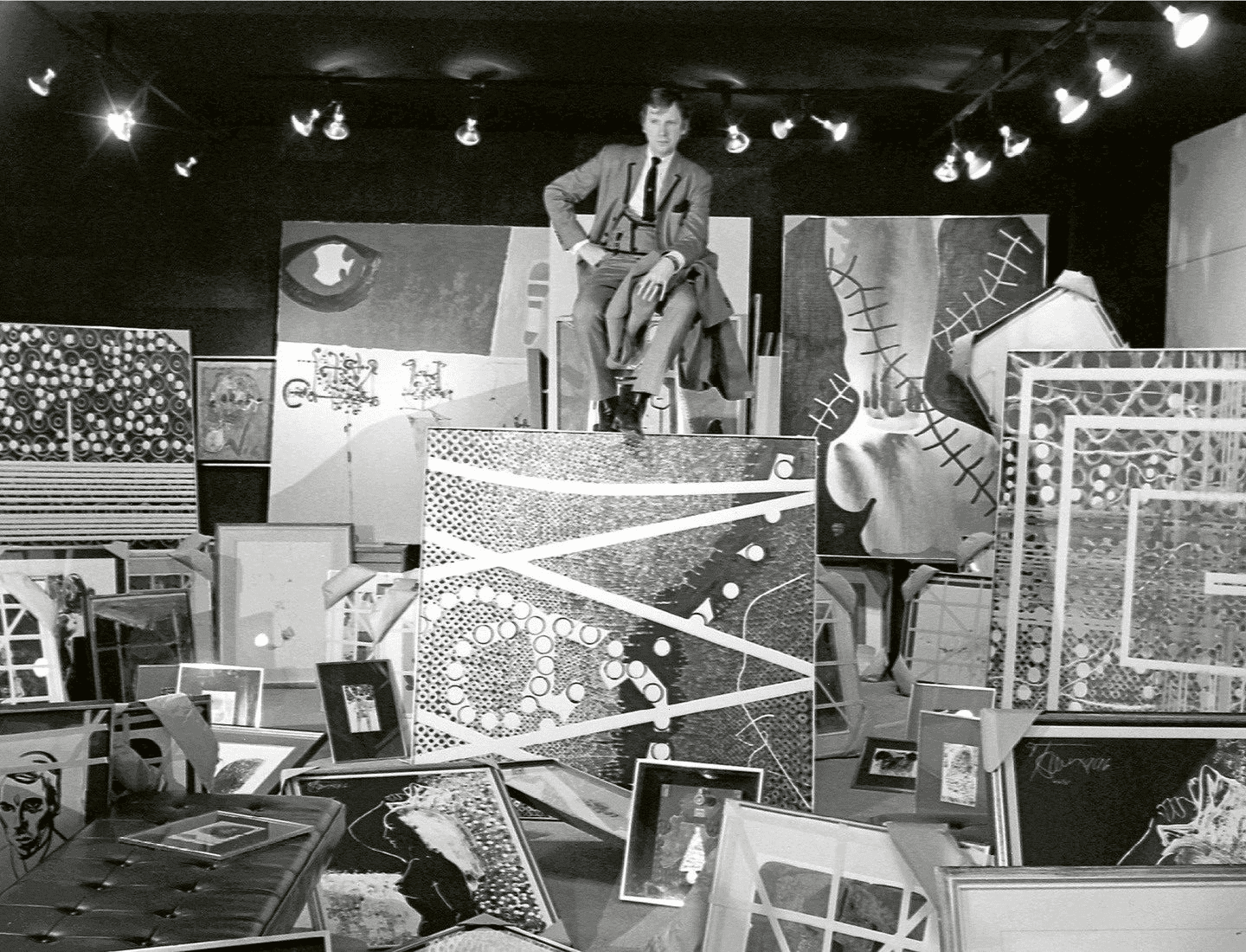
Like many of his contemporaries, Town began his career in advertising design. In 1954, he transformed images of Imperial Oil’s refineries into abstract forms. Through this work, he befriended Oscar Cahén, a prominent German-Jewish illustrator in Canada who became his mentor.
Town’s first major breakthrough came in 1953 with his innovative monotype prints. His works caught the attention of gallery owner Douglas Duncan, who organized Town’s first solo exhibition in Toronto in 1954. The National Gallery of Canada acquired two of his prints, marking the start of his rise to prominence.
In 1957, Town became the leader of Painters Eleven, Toronto’s avant-garde abstract artist group. That same year, he was offered a solo exhibition at Galerie L’Actuelle, newly opened by Guido Molinari.
While Town and his peers were gaining recognition, tensions arose when William Ronald invited influential New York critic Clement Greenberg to critique the group’s work. Town and several members opposed the idea, believing they had already achieved international acclaim.
Major Projects and Achievements
In 1958, Town received a commission to create a mural for the Robert Saunders Power Plant in Cornwall, located along the St. Lawrence River. The mural symbolized the clash between natural forces and human ingenuity, showcasing Town’s dynamic use of shapes and curves. Photographs of Town working on the mural appeared in local newspapers, further cementing his status as an important Canadian artist.
The late 1950s marked a boom in Toronto’s art scene, with new galleries opening and investors supporting emerging talent. Interest in abstract art spread across Canada, and Town’s work consistently earned top accolades at the National Gallery’s biennial Canadian painting exhibitions, beginning in 1955.
In 1964, Town was invited to represent Canada at the prestigious Venice Biennale. He was also named one of the 361 leading global artists of the time. By 1965, Town’s paintings commanded prices upwards of $4,000—a considerable sum at the time.
In 1969, Town appeared on the cover of the Canadian edition of Time Magazine, solidifying his reputation as a leading figure in Toronto’s art world and Canada’s most prominent artist of the decade.
Harold Town’s relentless work ethic and innovative vision propelled his success. He spent countless hours in his studio, exploring new media and expanding his creative repertoire. Town’s work included collages, canvases, and series of prints and drawings for cinemas and films.
By constantly pushing boundaries, Town helped redefine abstract art in Canada. His influence extended beyond his own works, inspiring generations of Canadian artists to experiment and innovate.
In 1988, Harold Town passed away from cancer. Despite his untimely death, his legacy endures. Known for his dedication and groundbreaking contributions, Town remains a symbol of Toronto’s vibrant art scene and a cornerstone of Canadian abstract art.