

Tom Thomson is celebrated as one of Canada’s most iconic artists. His work is renowned worldwide, and although his career was brief, his legacy endures to this day. Learn more about the life and art of this remarkable figure below on toronto1.one.
Early Years
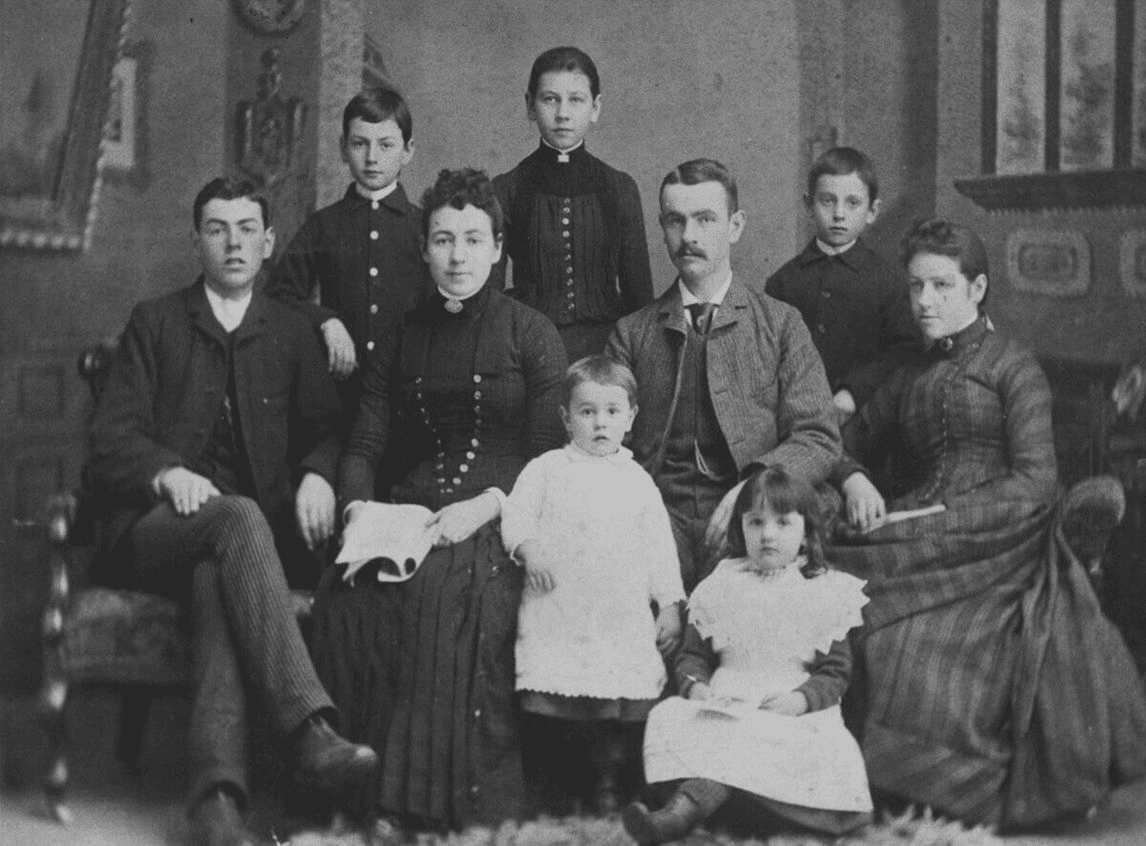
Tom Thomson was born on August 5, 1887, in Claremont, Ontario. He was the sixth child and third son of Margaret and John Thomson, who had a total of ten children. When Tom was two months old, his family moved to a farm in Leith. Growing up, he was surrounded by a large, artistic family who loved music, reading, fishing, and hunting. Many of the Thomson children excelled in drawing, sang in the church choir, and played in the local orchestra.
While attending high school, Thomson also took mandolin lessons at the Toronto Conservatory of Music. At the age of 10, he developed rheumatic fever, which caused him to miss a year of school. Once recovered, he completed his high school education.
In 1899, Thomson began training at an iron foundry in Owen Sound but left after eight months. He then attended the Canadian Business College in Chatham, Ontario, but left after another eight months, realizing it wasn’t for him. In the summer of 1901, Thomson traveled to Seattle, where his elder brother George had established the Acme Business College.
In 1902, after six months at Acme, Thomson began working as a draftsman and engraver for Maring & Ladd (later Maring & Blake), a firm specializing in advertising and tricolour printing. His primary duties involved creating business cards, brochures, and posters. Like many artists of his time, Thomson earned a living through graphic design. However, in late 1904, he unexpectedly returned to Leith.
Artistic Career in Toronto
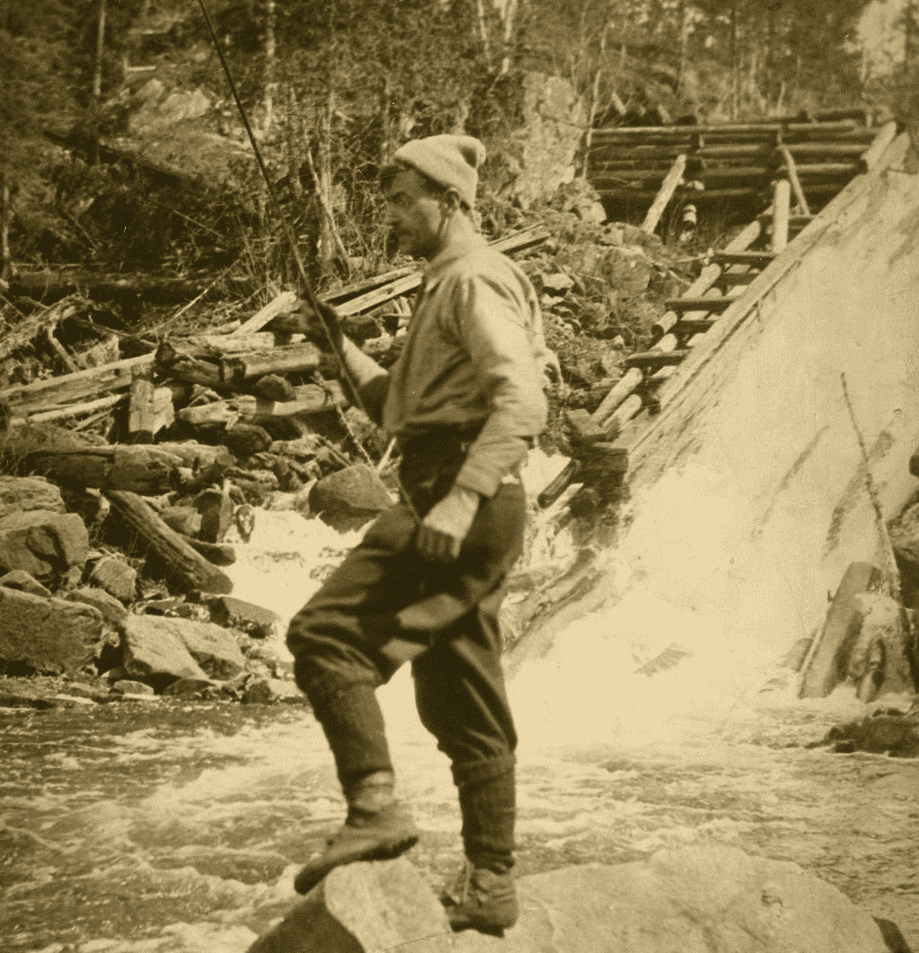
In 1905, Thomson moved to Toronto, where he worked at various advertising agencies and mingled with local artists. In 1912, he decided to pursue painting, purchasing supplies and making his first attempts at the medium.
Accompanied by his colleague Ben Jackson, Thomson embarked on his first canoe trip to Algonquin Park, a vast forest and recreation area located 300 km north of Toronto. There, he painted a ruined dam. Later that fall, he ventured to the Mississauga Forest Reserve, where his canoe capsized, causing him to lose nearly all his oil sketches.
Undeterred, Thomson continued honing his craft. Immersed in Toronto’s artistic circles, he built relationships with fellow artists. By 1913, Thomson began participating in plein air painting excursions in the rural areas surrounding Toronto. While his early works, such as Lac du Nord (1912-1913) and Evening (1913), were neither technically complex nor groundbreaking, their composition and use of colour revealed his exceptional talent.
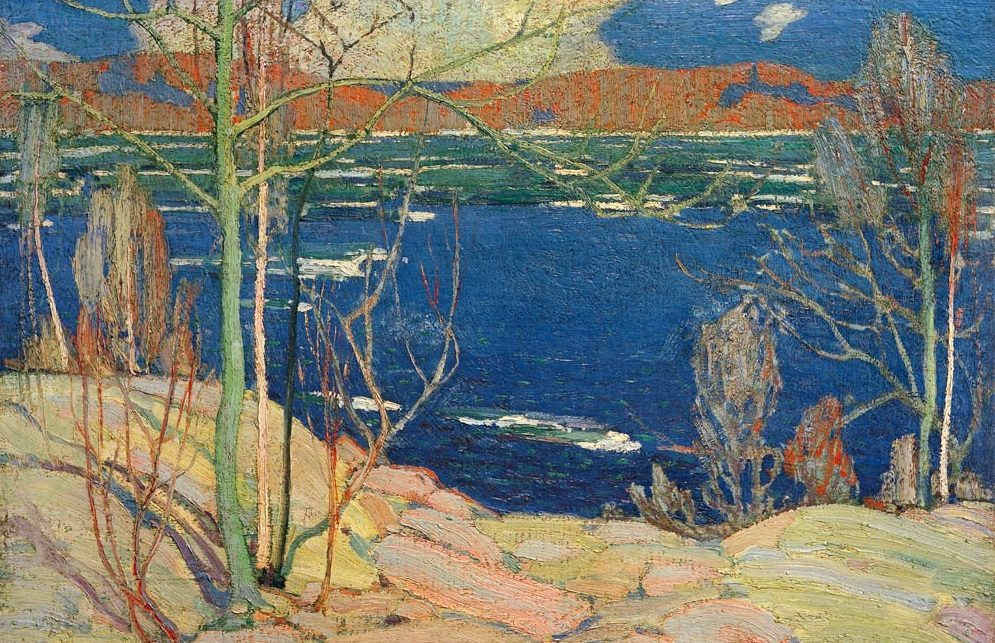
By 1914, Thomson’s career had gained significant momentum. He traveled extensively through Ontario’s wilderness, painting vibrant landscapes. By the end of that year, his work was exhibited in Ontario art shows. Sketches from 1917 demonstrate the technical mastery he had achieved. Paintings like The Rapids exemplify the confidence with which he approached composition.
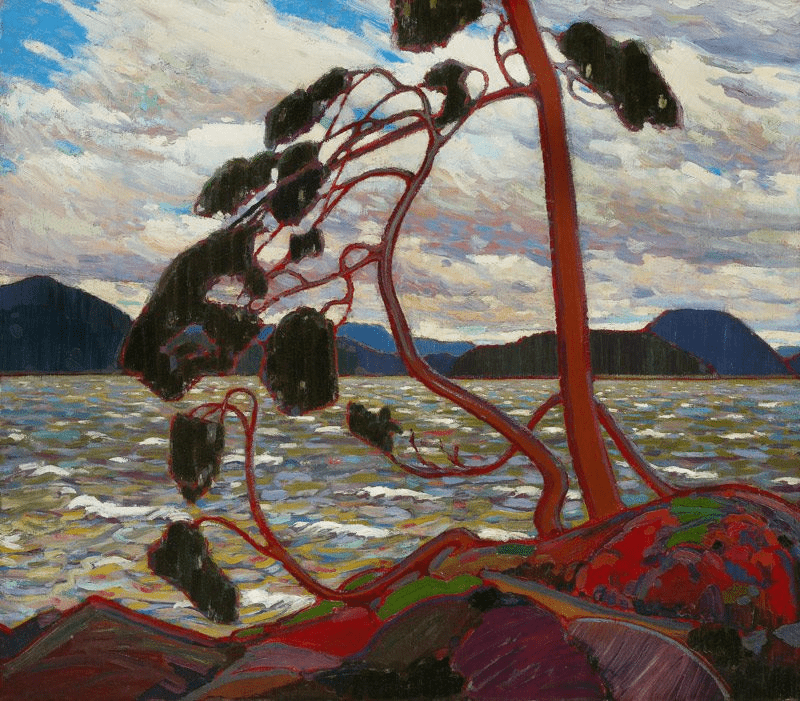
Thomson’s work often depicted trees, skies, lakes, and rivers, using bold brushstrokes and thick applications of paint to capture the vivid landscapes of Ontario. Over his career, he produced over 400 oil sketches on wooden panels and 50 larger works on canvas.
In the summer of 1917, Thomson tragically passed away under mysterious circumstances. While traveling to Joe Lake Dam, he disappeared. His body was found in the lake eight days later. On July 16, 1917, Thomson was buried nearby. Later, his family arranged for his body to be exhumed and reburied in Leith Cemetery.
Despite his untimely death, Thomson’s legacy lives on. His works remain a testament to his unique ability to capture the beauty and vibrancy of Ontario’s landscapes.
Sources:
- Art Canada Institute
- National Gallery of Canada
- Ontario Heritage Trust