

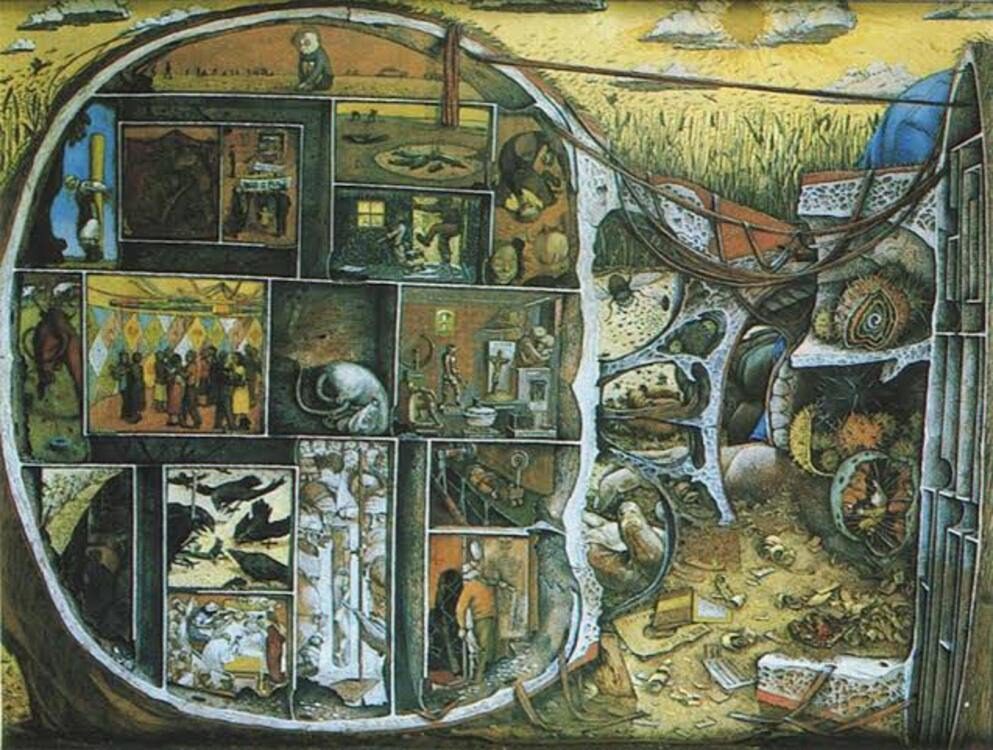
When a young man of Ukrainian descent from the Canadian prairies arrived on the doorstep of the Maudsley psychiatric hospital in London in 1953, he was holding not just a suitcase, but a painting. This painting, hauntingly detailed and complex, was called “The Maze.” It was not merely a work of art but a desperate attempt to visualize the fractured consciousness and overwhelming depression that was consuming him.
That young man was Vasyl Kurelek, and this painting became his cry for help. Decades later, he would become one of Canada’s most beloved and original artists, with his home and creative studio based in Toronto. His story is not the tale of a bohemian artist, but a drama about a titanic struggle with inner demons—a battle he won through faith and relentless work, as detailed on toronto1.one.
Childhood
Vasyl Kurelek was born on March 3, 1927, on a farm in Alberta. His story is closely intertwined with two waves of Ukrainian immigration to Canada. The artist’s father, Dmytro Kurelek, arrived from Bukovyna in 1924. His mother, Mary Huculak, in contrast, was born in Canada. Her family was among the very first Ukrainian settlers, having arrived in the country in 1896. Vasyl was the eldest of seven children in the family.
The future artist’s childhood was marked by hard work and harsh realities. The Great Depression forced the family to leave their grain farm in Alberta and move to a dairy farm near Stonewall, Manitoba, where young Vasyl felt like an outsider both at home and at school. From an early age, the boy helped his father, but his soul yearned for something different. He had no knack for mechanics, which drew constant irritation and sharp criticism from his pragmatic father. But Dmytro Kurelek’s greatest disappointment was his son’s desire to become an artist—a pursuit he considered a complete waste of time. This profound conflict with his father and a sense of his own inadequacy haunted Vasyl throughout his life, becoming the source of his profound depression.
In Search of Himself: Art, Pain, and Faith
Against his father’s wishes, Kurelek followed his calling. After earning a Bachelor of Arts degree from the University of Manitoba, he left to study art.
His first extended visit to Toronto took place in the early 1950s, when he briefly studied at the Ontario College of Art (now OCAD University). But inner turmoil drove him onward. He travelled to Mexico, to an art school in San Miguel de Allende. The real turning point, however, came in Europe.
A 25-year-old Vasyl moved to England, and it was during this time that his struggle hit rock bottom. He was suffering from clinical depression, acute anxiety attacks, and chronic pain in his eyes. In desperation, he voluntarily sought help at the Maudsley psychiatric hospital in London. It was there, within the hospital walls, that he created one of his most famous early works – “The Maze,” a grim and detailed depiction of his tortured soul. In this painting, he portrayed a self-portrait in cross-section: a skull divided into compartments, with each “room” acting out a scene from his personal fears, traumas, and memories. The work is a candid and shocking document of a mental breakdown.
His treatment continued at Netherne Hospital. Here, for therapeutic purposes, he worked with Edward Adamson, a pioneer in art therapy. Art became not just a calling for Kurelek, but an instrument of healing. He poured his pain onto the canvas, creating powerful paintings, rich with symbolism.
It was during this dark period in 1957 that he found light in faith, converting to Roman Catholicism. This conversion, which he called “the best thing that ever happened to me,” gave him a new purpose and hope. He credited his healing to God and began working on a grand series of 160 paintings, “The Passion of Christ According to St. Matthew.”
Triumph in Toronto: How a Frame Maker Became an Art Star
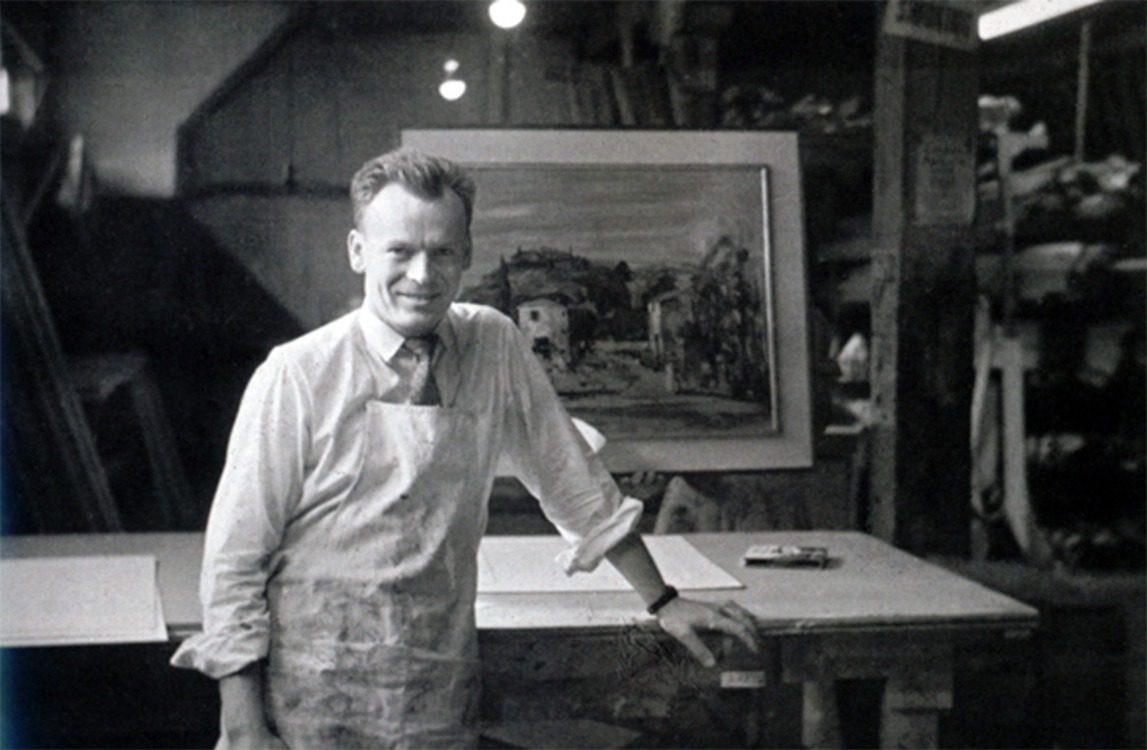
In 1959, after seven years in England, Vasyl Kurelek returned to Canada and settled in Toronto. His path to recognition was unconventional. Having experience in making picture frames, he went to apply for a job at the Isaacs Gallery – one of the city’s leading galleries. To showcase his skills, he brought a frame he had made himself, inserting one of his own paintings into it as an example. The gallery owner, Av Isaacs, was so impressed—not by the frame, but by the canvas itself—that instead of a job as a framer, he offered Kurelek a solo exhibition.
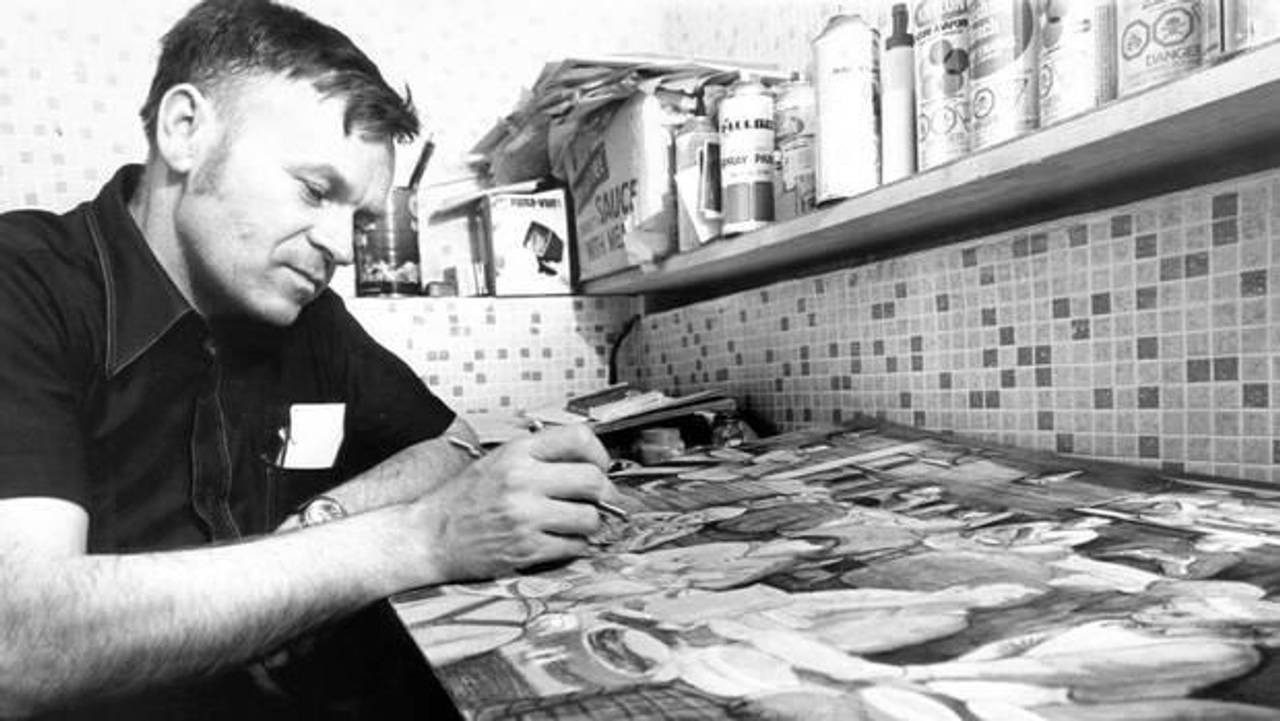
His first exhibition was held in 1960 and became a sensation. Toronto had discovered a unique artist. Over the following years, Kurelek established himself as one of the most important figures in Canadian art. He married Jean Andrews, and together they had four children. The family settled in The Beaches neighbourhood of Toronto, and their home became his studio. Kurelek was incredibly disciplined. He worked from 5 a.m., creating hundreds, and eventually thousands, of works. It was here, in this city, that his talent blossomed and received the recognition it deserved.
The Worlds of Vasyl Kurelek: Memory, Faith, and Apocalypse
Kurelek’s work can be broadly divided into several main themes, which often intertwined.
- Ukrainian heritage and the immigrant experience. Kurelek felt a moral obligation to document the history of his people. He created vast series of works dedicated to the life of the first Ukrainian settlers in Canada. Paintings like “The Ukrainian Pioneer” or the series about his father, “Dmytro,” are not just illustrations but epic canvases of struggle, labour, and faith. He meticulously depicted daily life, work in the fields, and Christmas celebrations. For the Ukrainian community in Toronto and across Canada, he became a chronicler who translated their oral history into the language of high art.
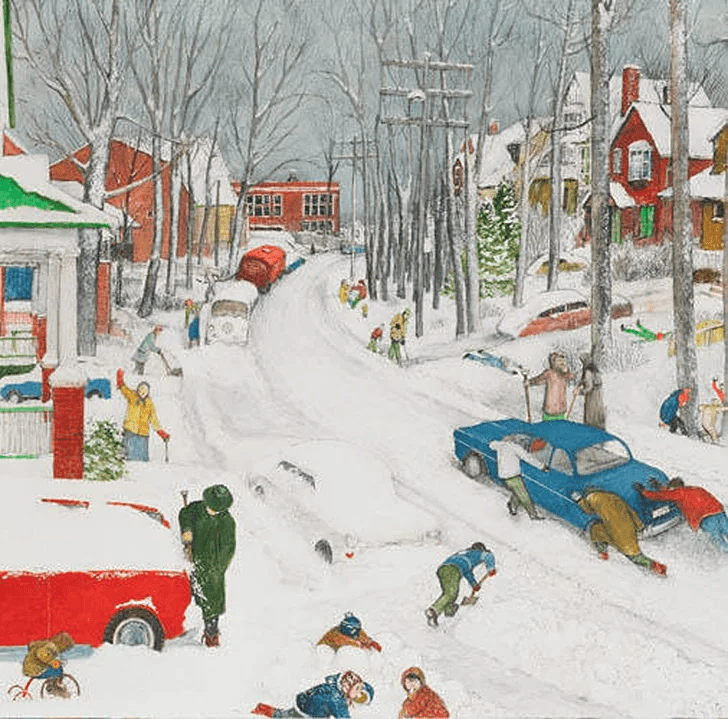
- Nostalgia for the Prairies. Although Vasyl lived in Toronto, his heart often returned to his childhood in Manitoba. His most popular and lighthearted works are “A Prairie Boy’s Winter” (1973) and “A Prairie Boy’s Summer” (1975). These are paintings filled with warmth and childhood pastimes: hockey, tobogganing, farm chores, and more. In the 1970s, Kurelek began publishing books in which his paintings were accompanied by simple texts. These became classics of Canadian literature, winning prestigious awards, including from the New York Times.
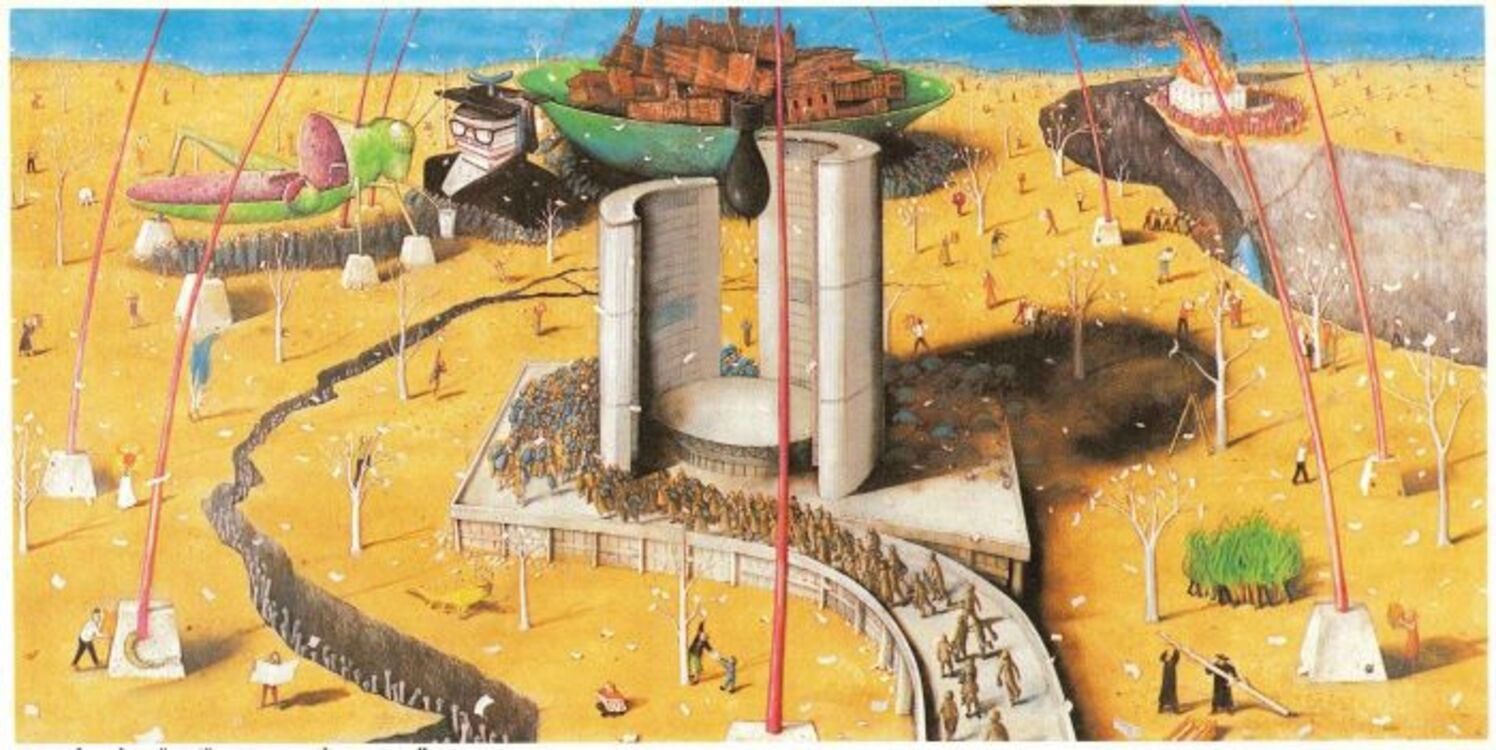
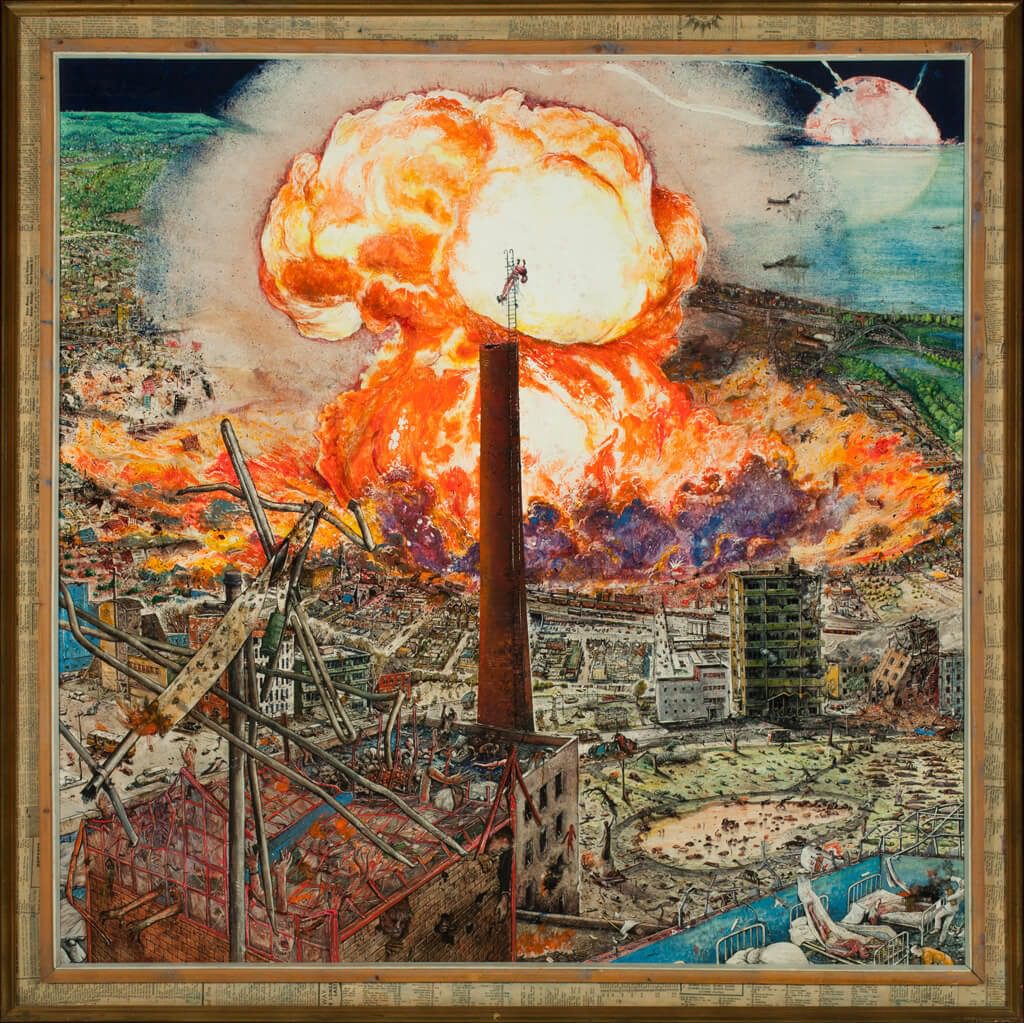
- Religious and apocalyptic visions. This is the most complex and unsettling part of his work. Kurelek was convinced the world was on the brink of moral collapse and nuclear war. He created large, didactic (instructional) paintings depicting the consequences of sin. He might portray a picnic in Toronto while in the background, a nuclear mushroom cloud rises over the city (“This is the Nemesis”).
Homecoming and Enduring Legacy
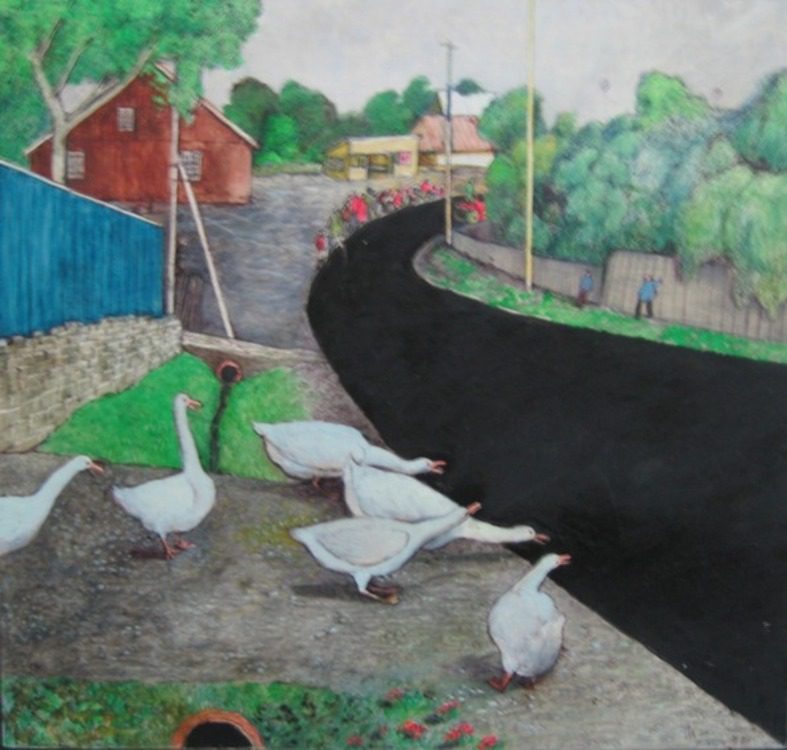
Towards the end of his life, Kurelek’s dream came true: he visited the land of his ancestors. In 1970 and 1977, he travelled to Ukraine, to the region of Bukovyna. Awed by the beauty of the land he had heard so much about from his grandfather, he rushed to make sketches, intending to complete the paintings back in Canada. This is how his famous “Bukovynian Series” was born—canvases filled with love for his ancestral homeland.
Vasyl Kurelek died of cancer on November 3, 1977, in Toronto. The artist was buried in Mount Pleasant Cemetery wearing an embroidered Ukrainian shirt (a vyshyvanka). He was only 50 years old. Despite such a short life, he left behind a colossal legacy: over 7,000 works. His art challenged the fashionable abstract trends of the 1960s. He was a realist, a storyteller, and a moralist. In 1976, he was awarded Canada’s highest civilian honour, the Order of Canada.
His legacy lives on. Kurelek’s paintings are held in the collections of the National Gallery of Canada, the Art Gallery of Ontario (AGO) in Toronto, and many other museums worldwide. He is remembered in history as an artist who successfully combined profound personal experiences—pain, faith, and the memory of his roots—with universal themes of human existence. For Toronto, he will forever remain the artist who brought the quiet light of the distant prairies and the indomitable spirit of the Ukrainian soul to the bustling metropolis.