

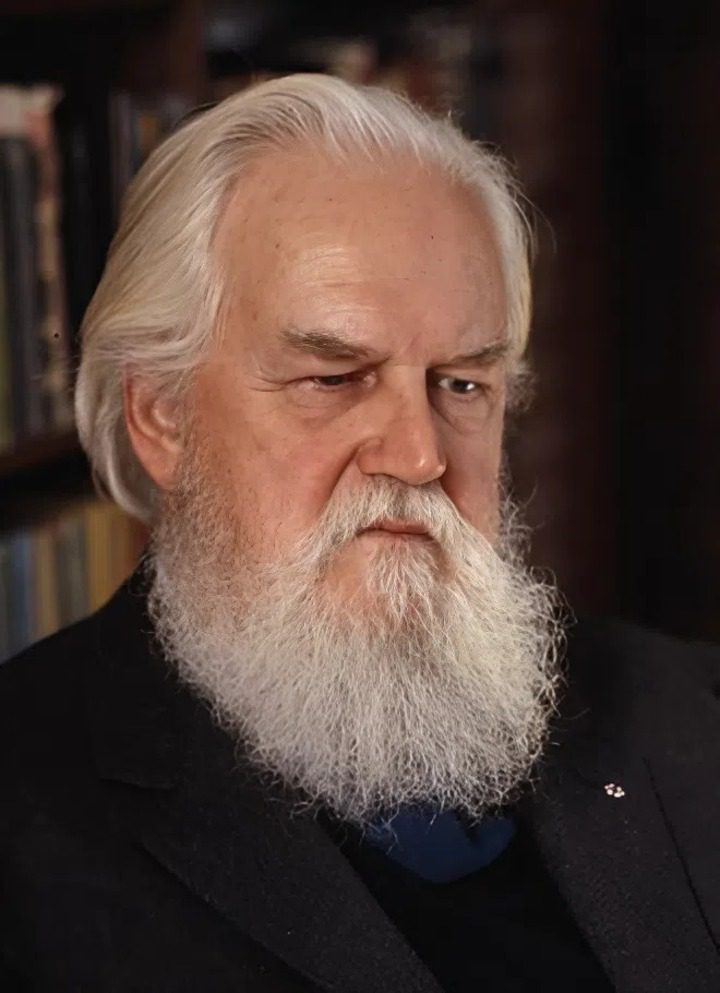
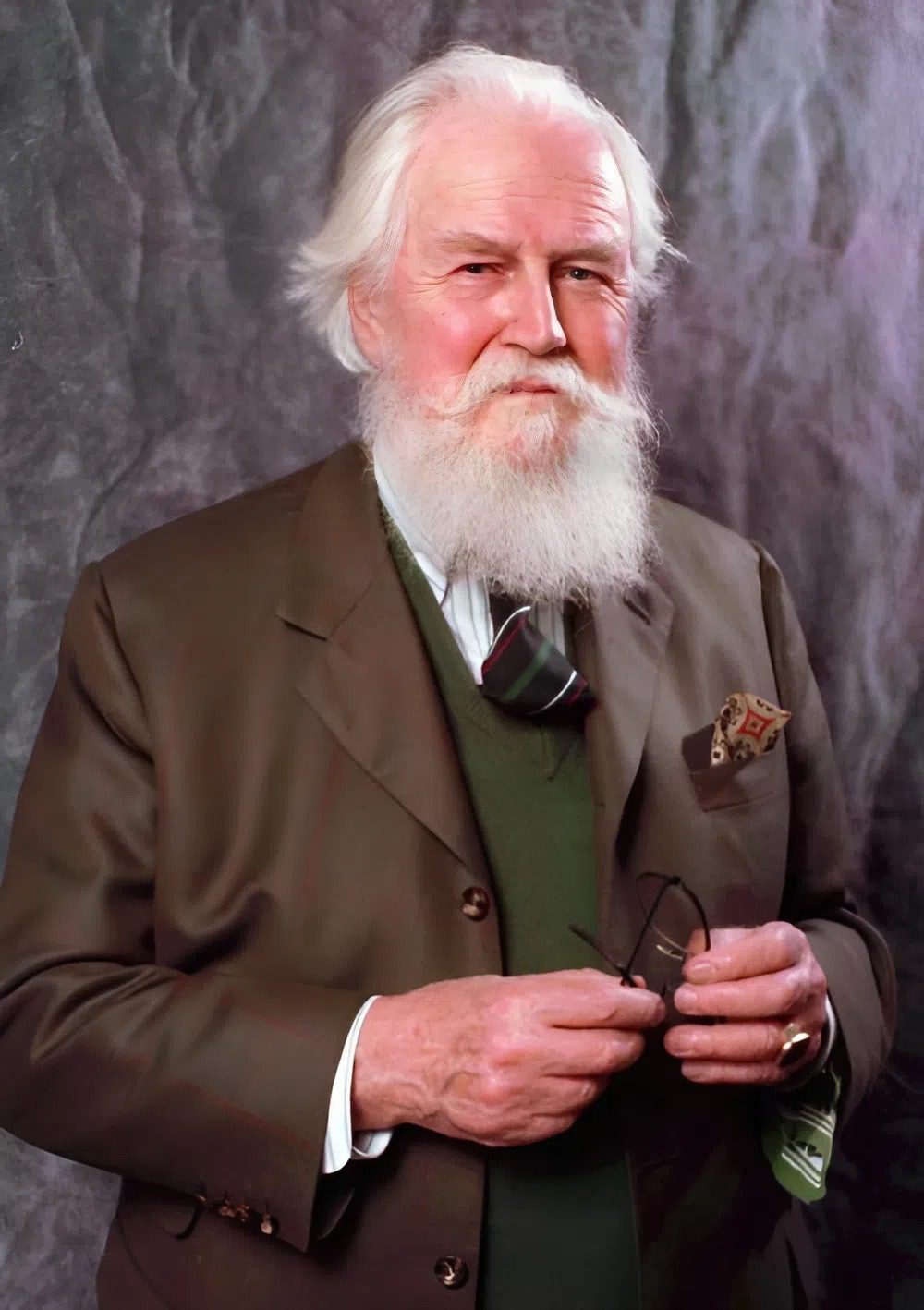
If you were strolling through the University of Toronto campus in the 1970s or 80s, you might have thought you had accidentally wandered onto the set of a movie about wizards. Approaching you might be a figure who seemed to have stepped directly out of the Victorian era: a majestic man in a tweed three-piece suit, with a lush, snow-white beard cascading down his chest and a piercing gaze from beneath bushy eyebrows.
This was not an actor, nor was it Santa Claus. This was Robertson Davies—the “one-man band” of Canadian culture: novelist, playwright, journalist, professor, and the first Master of Massey College. To the world, he is the author of the celebrated Deptford Trilogy. But for Toronto, he became the creator of a unique urban legend, transforming an ordinary educational institution into a place full of mystery, ritual, and intellectual magic. Get comfortable and read about this colourful and extraordinary personality on toronto1.one.
The Boy Who Wanted to Be an Actor (But Became a Legend)
William Robertson Davies was born on August 13, 1913, in the small town of Thamesville, Ontario. This provincial backwater would later serve as the prototype for the fictional Deptford—a place where murder, sanctity, and madness hide behind mundane façades.
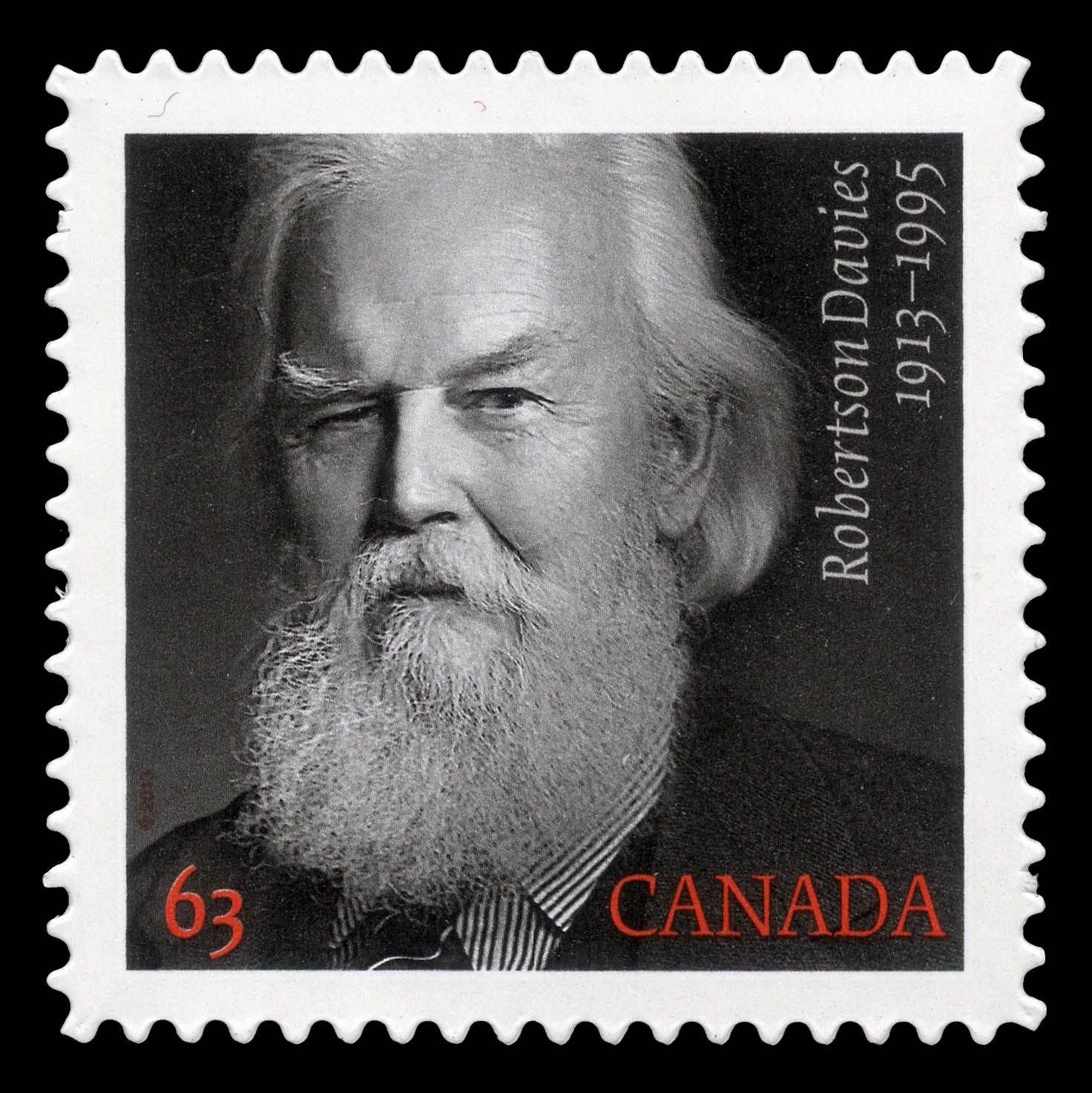
His father was a senator and a newspaper proprietor, so Robertson grew up surrounded by books and printer’s ink. However, his true passion was the theatre. His education was classical and brilliant: Upper Canada College in Toronto, Queen’s University, and later, the prestigious Balliol College at Oxford. It was in England that he immersed himself in the world of drama, working at London’s famous Old Vic Theatre. There, he met his future wife, Australian Brenda Mathews, before returning to Canada in 1940.
Over the next twenty years, Davies became, as was aptly put, “a Canadian cultural centre in one person.” He worked as the editor of the Peterborough Examiner, where, under the pseudonym Samuel Marchbanks, he wrote witty and wise columns that earned him his initial fame. Concurrently, he penned plays and his first novels—The Salterton Trilogy. He was a founding member of the renowned Stratford Shakespeare Festival, wrote for the Toronto Daily Star, and lectured tirelessly, convincing Canadians of the importance of the arts.
He saw his mission clearly. Davies was convinced that Canada expected three things from its writers: the definition of a national character, the vigilant defence of intellectual freedom and moral strength, and, most importantly, a truthful portrayal of Canadian life.
But Davies’ true transformation into a “Literary Lion” occurred when he moved to Toronto.
Massey College, or How to Create a Tradition from Scratch
In the 1960s, the University of Toronto decided to build a new college for graduate students—Massey College. It was intended to be an elite institution modeled after Oxford colleges. Architect Ron Thom created an incredible building in a modernist style that simultaneously resembled a medieval fortress of brick and concrete.
But a building is merely walls. It was Robertson Davies, appointed as its first Master, who breathed a soul into it.
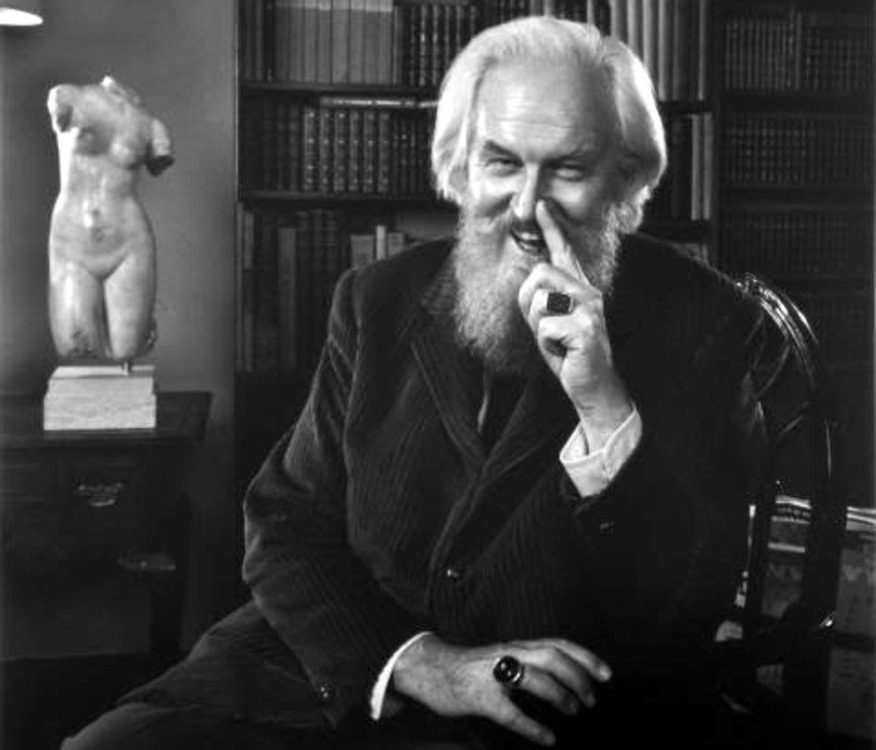
Davies approached this task like a director staging a play. He understood that for a new place to become iconic, it needed ancient traditions… even if they had to be invented that very evening. He introduced the wearing of academic gowns at dinner, established a “High Table” for professors and guests, and cultivated the atmosphere of a closed order where intellect was valued above all else.
Christmas Ghost Stories
The most famous tradition Davies established was Gaudiest Night—the college’s annual Christmas party. Every year, Davies wrote and personally read a new Ghost Story. These were not mere horror tales, but witty, ironic, and often eerie narratives about academic life, featuring the spirits of past professors or mystical occurrences in the library. Students sat in the dim light of the Great Hall, listening to his booming voice, believing that magic truly existed. Later, these stories were published as a collection titled The High Spirits, becoming a classic of the genre.
The Writer’s Workshop: The Snowball That Changed Everything
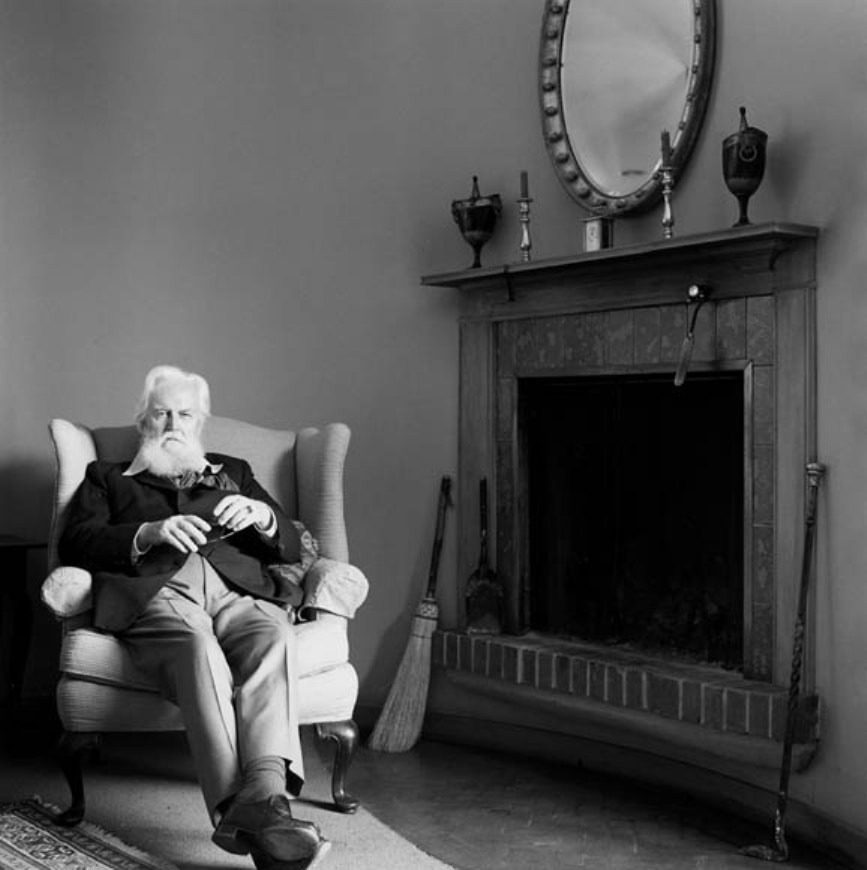
It was while living and working in Toronto, in his office at Massey College, that Davies wrote the work that changed Canadian literature forever—the novel Fifth Business (1970).
Before this, Canadian literature was often considered “quiet” and dull, focused on survival in the wilderness. Davies showed that demons, Jungian archetypes, and ancient myths live within the Canadian soul.
Davies was a master of complex, multi-layered plots, but his creative process began with something simple—an image or idea that wouldn’t leave him alone. As Robertson recounted in an interview, the idea for his most famous novel, Fifth Business, haunted him for over ten years in the form of an intrusive image: two boys on a snowy village street and a snowball flying toward its target. This scene, replaying in his imagination again and again, forced the writer to wonder: what lies behind this act? What are its consequences? As soon as he began seeking answers, the story, in his words, was born almost instantly.
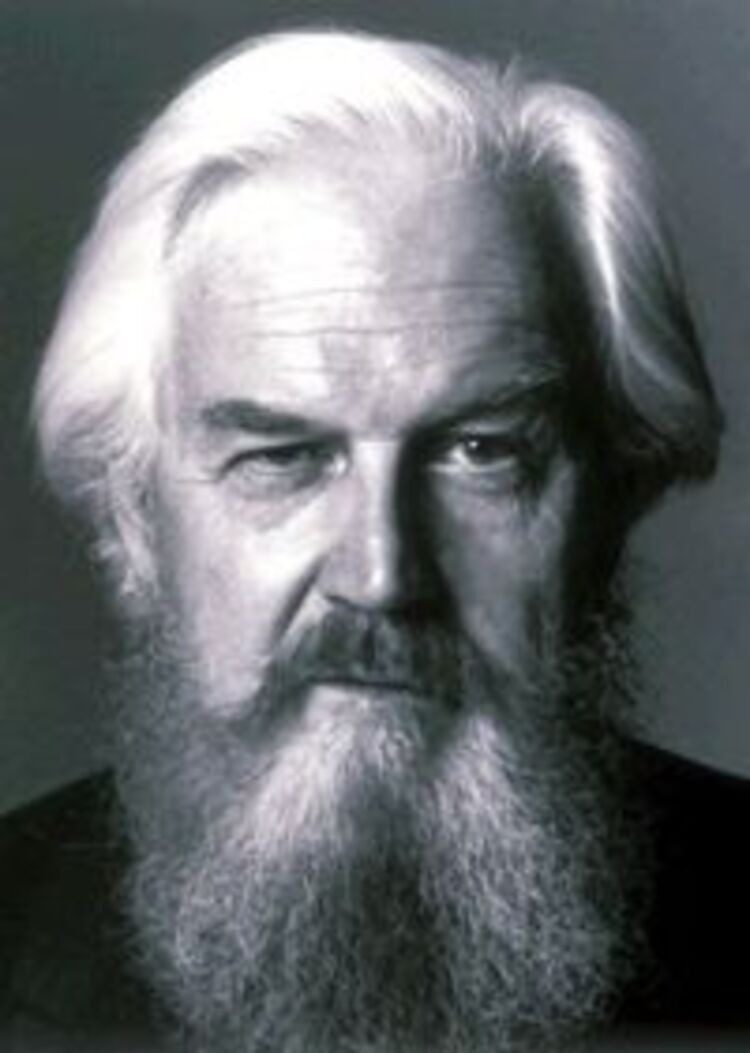
That snowball, thrown at the turn of the century in a small Ontario town, unfolds into an epic tale spanning decades, continents, wars, magic, and the search for sanctity. This was Davies’ genius: he took ordinary Canadian life and imbued it with a mythological, almost operatic scale.
He worked methodically. By his own admission, he created plans so detailed and took so many notes that their volume sometimes equaled or even exceeded that of the future book. This preparation allowed him to write quickly, weaving complex psychological and philosophical ideas into the fabric of the novel.
Canada’s Voice on the World Stage
Having achieved fame, Davies became Canada’s cultural ambassador, though he viewed this status with irony. He often encountered dismissive attitudes, particularly from the British establishment, which still viewed Canada as a cultural colony.
He recalled with bitterness a review in London’s The Times, where his work was praised, yet the piece began with the words: “To talk of a good novel by a Canadian writer sounds like the start of a bad joke.” “With friends like these, who needs enemies?” Davies rhetorically asked. Yet, his talent, erudition, and powerful prose eventually broke through the wall of skepticism. His books became bestsellers around the world.
Even after retiring, he didn’t slow down, joking that he had become even busier. He was invited to lectures, festivals, and television shows. He wrote two more successful trilogies—The Cornish Trilogy and The Toronto Trilogy. He continued to live in Toronto, remaining its wise and occasionally grumpy guardian genius.
Robertson Davies was a master of self-presentation. He knew the public wanted to see a “Great Writer,” and he gave them exactly that. He never appeared in public without an immaculate suit. He spoke in full, literary sentences that could be printed immediately. He was witty, sometimes sharp, but always charming.
In Toronto, he became something of a landmark. Students would whisper when they saw him walking down Hoskin Avenue. He was living proof that one could be a world-class intellectual in Canada without moving to London or New York.
Legacy
Robertson Davies passed away on December 2, 1995, in Toronto, leaving behind a colossal body of work: 12 novels, dozens of plays, and collections of essays and lectures. But his main legacy is the shift in Canada’s cultural self-awareness.
He proved that Canadian life is not just about “snow and survival,” but rich material for deep, universal stories about good and evil, faith and doubt, and the mysterious threads of fate that bind people together. He taught Canadians to see the magic in their everyday lives and to take pride in their own intellectual tradition.
Massey College still lives by the traditions he established. His portrait hangs in the Great Hall, and students still tell legends that his spirit occasionally checks to see if the books in the library are shelved correctly.
Robertson Davies was a man who taught Toronto to believe in fairy tales for adults. He showed that even in a modern metropolis, there is room for mystery if you know where to look, for, as he liked to say, the eyes see only what the mind is prepared to comprehend.
So if you are searching for the soul of literary Toronto, listen closely: within the brick walls of Massey College, you might just still hear the booming laughter of its first Master.