

For many Ukrainians, the name Petro Jacyk is synonymous with the annual Ukrainian language competition. Known as one of Ukraine’s greatest philanthropists, Jacyk made remarkable contributions to charitable causes, donating nearly 30 million dollars to initiatives in Ukraine. Read more on toronto1.one.
Biographical Background
Petro Jacyk was born on July 7, 1921, in the Carpathian village of Verkhnie Synovydne (Skole District, Lviv Region) into a large peasant family. After his father’s early death, Jacyk, the eldest child, had to work hard to support his younger siblings. He was only 14 years old. After completing seven years of schooling, he attended evening agricultural courses. Even as a young boy, Jacyk understood the challenges of farm work and dreamed of a better life. He decided to become a railway worker and, after completing the necessary training, worked as a machinist.
In 1944, Jacyk moved to Germany, where he studied at the Ukrainian Technical and Economic Institute. By 1949, at the age of 27, he immigrated to Canada with only seven dollars in his pocket. Initially, he worked in a restaurant. A year later, together with two fellow Ukrainians, Jacyk opened a Ukrainian bookstore called “Arka” in Toronto. More than just a shop, it became a popular meeting place for Ukrainian immigrants. The business thrived, but Jacyk didn’t stop there, expanding into furniture sales. In 1953, he co-founded a construction company with 18 partners. Unfortunately, he lost about $35,000 in this venture, which became a valuable life lesson.
Undeterred, Jacyk established his own construction company, Prombank Investment Limited, in the 1950s, becoming one of Canada’s wealthiest businessmen of Ukrainian descent. Over time, he began to view wealth not just as something to accumulate but as a resource for meaningful contributions. His first donation, $1,000, was made to fund a primer by educator Maria Deyko.
Jacyk deeply valued Ukrainian culture, education, and science. He lived modestly but was always generous in his philanthropy. Throughout his life, he remained connected to his Ukrainian roots and sought to benefit his homeland.
Petro Jacyk passed away in 2001 in Toronto, Canada. His daughter continues his legacy.
Contributions to Ukraine and Beyond
Petro Jacyk became an honorary member of several prominent academic institutions worldwide. He was received by presidents, ambassadors, and politicians, earning the admiration of scholars across various nations and continents.
One of his most significant projects was funding the translation and full publication of Mykhailo Hrushevsky’s multi-volume “History of Ukraine-Rus’” in English. Jacyk also founded the League of Ukrainian Philanthropists, becoming its first president. His efforts led to the establishment of the Harvard Ukrainian Research Institute in the United States. Additionally, Jacyk financed the publication of the multi-volume “Encyclopedia of Ukraine” and numerous other projects. Ukrainian studies programs bearing his name were established at universities in London, Harvard, Columbia, Toronto, and elsewhere.
Several books about Jacyk have been published, the most notable being “The Ukrainian Who Refused to Be Poor” by Mykhailo Slaboshpytskyi.
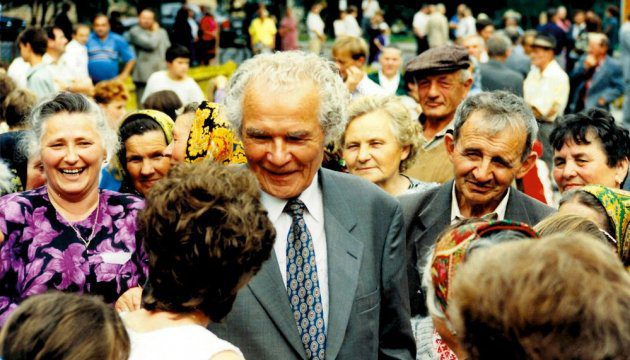
In May 2001, the Petro Jacyk International Ukrainian Language Competition was launched, allowing talented students to showcase their knowledge. Jacyk dreamed of gaining recognition from his people, maintained ties with Ukrainian leaders, and visited his homeland frequently. Each visit was a momentous event that required careful preparation.
Despite his wealth, Jacyk remained humble, endearing himself to people. He personally repaired his modest home and didn’t shy away from mowing his own lawn. His children took a regular school bus, and while he drove a Mercedes to important meetings, it was only because it aligned with the business dress code.
Petro Jacyk’s life is a testament to resilience, hard work, and unwavering dedication to his roots. His contributions have left a lasting impact on Ukrainian culture, education, and philanthropy. He stands as a shining example of how one individual can bridge the gap between personal success and meaningful service to others.